Freeze Drying vs. Dehydrating: What’s the Difference?
Both methods preserve food, but the results are dramatically different. Learn how freeze drying compares to traditional dehydration in shelf life, nutrition, taste, and cost.
Process: Dehydrating uses heat; freeze drying uses freezing + vacuum sublimation.
Shelf Life: Dehydrated food lasts months to a few years. Properly packaged freeze-dried food can last for many years, depending on the food and storage.
Nutrition: Heat degrades vitamins in dehydration. Freeze drying uses low temperatures and can preserve many nutrients very well, though retention varies by food and nutrient.
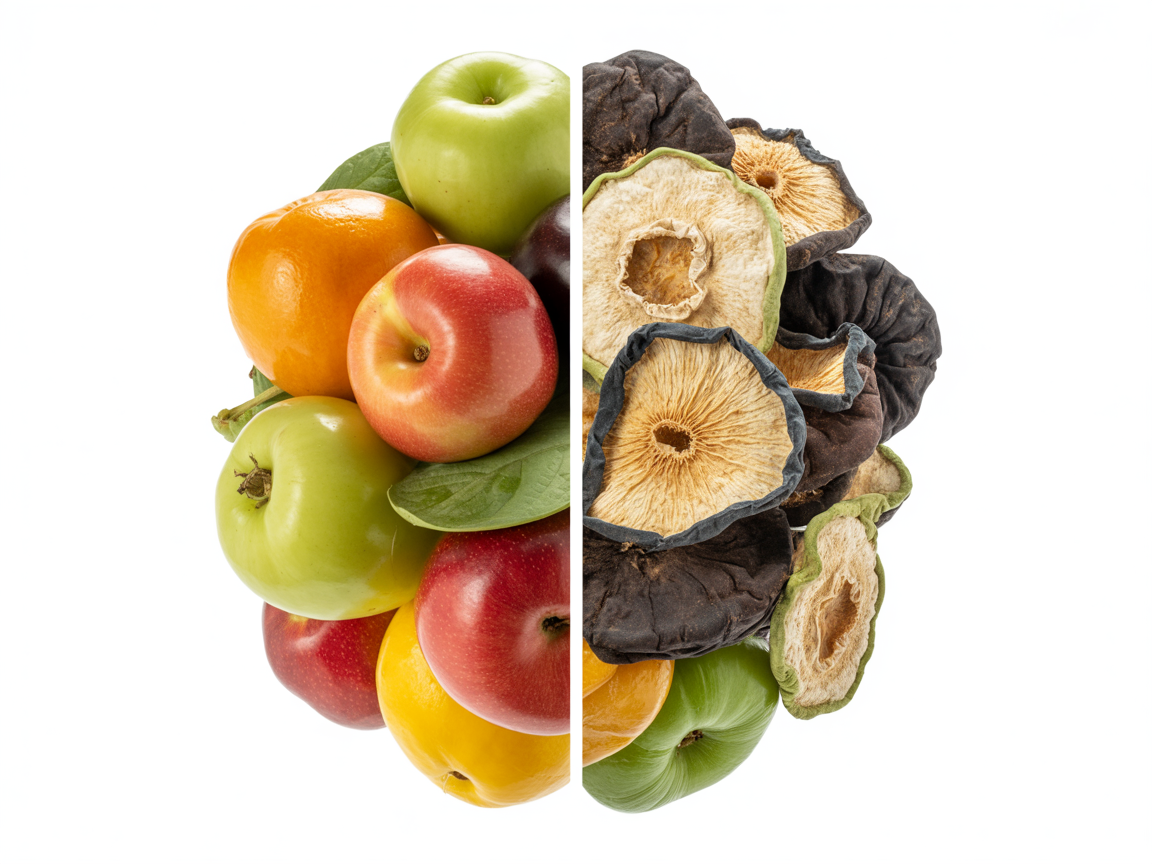
Flavor & Texture: Dehydrated food is shrunken and leathery. Freeze-dried food retains original appearance and taste.
Rehydration: Dehydrated food takes time and may not fully restore. Freeze-dried food rehydrates in minutes.
Cost: Dehydrators are inexpensive. Freeze dryers are a bigger investment but produce superior results.
Both have their place, but for premium quality and long-term preservation, freeze drying is the clear winner.
Freeze-drying results vary by food, formulation, preparation, processing conditions, packaging and storage. Figures shown on this website are general educational estimates and should not be interpreted as guaranteed laboratory results for every product. Food safety & our process
Ready to Freeze Dry?
Whether you want to preserve food for yourself or develop a product for your business, WeFreezeDryIt can help.
Get a Free Quote