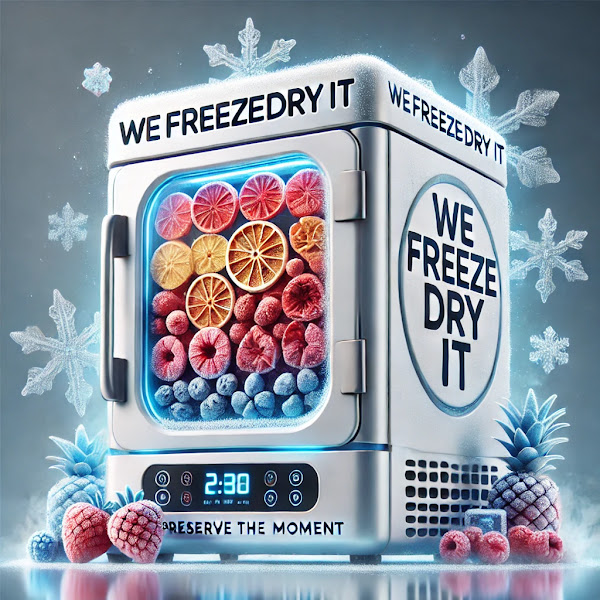
How Freeze Drying Works
Freeze drying removes water from food in three stages: the food is frozen solid, then placed under a strong vacuum so the ice turns directly into vapor (sublimation), and finally warmed gently to pull out the last traces of moisture. Because the water never becomes liquid, the food keeps its shape, color, flavor and most of its nutrients.
Freeze drying — also called lyophilization — is one of the gentlest ways to preserve food. Instead of using high heat to evaporate water, it relies on cold, vacuum and sublimation. The result is a lightweight, shelf-stable product that rehydrates back to something remarkably close to the original.
Stage 1 — Freezing
The food is first frozen solid, well below the point where all its water has turned to ice. Fast, thorough freezing creates small ice crystals, which helps the food keep its structure and texture through the rest of the process.
Stage 2 — Primary drying (sublimation)
Under a strong vacuum, the frozen water sublimates — it goes straight from solid ice to vapor without ever becoming liquid. This is the heart of freeze drying and where most of the moisture is removed. Because the food stays frozen, its cells are not crushed or cooked.
Stage 3 — Secondary drying
A little water always clings tightly to the food even after sublimation. Gentle warming in the final stage draws out this bound moisture, bringing the product down to a very low moisture level that makes long-term storage possible.
Why the result is so good
Because water is removed at low temperature, freeze-dried food keeps its original shape and color and rehydrates quickly. Flavor is concentrated, and a large share of heat-sensitive nutrients survives far better than with methods that cook or dehydrate with heat.
Have a freeze drying project?
WeFreezeDryIt helps people and businesses across Panama freeze dry foods and products.
Request a QuoteFrequently Asked Questions
Is freeze drying the same as dehydrating?
No. Dehydrating uses warm air to evaporate water, which shrinks food and can degrade heat-sensitive nutrients. Freeze drying removes water from frozen food by sublimation, so the food keeps its shape and rehydrates far better.
Does freeze drying cook the food?
No. The food stays frozen through the main drying stage and is only warmed very gently at the end, so it is not cooked. Raw ingredients stay raw.
How long does a freeze drying cycle take?
A complete cycle generally runs about a day or more, and the exact time varies with the food, how it is prepared, and how full the machine is. Denser and higher-moisture foods take longer.