What is Freeze Drying and How Does It Preserve Food?
Freeze drying, or lyophilization, is a low-temperature dehydration process that freezes a product, lowers pressure, and removes ice by sublimation — preserving structure, flavor, and nutrition.
Freeze drying, technically known as lyophilization, is a low-temperature dehydration process that involves freezing a product, lowering the pressure, and then removing the ice by sublimation. The result is a product that retains its original structure, flavor, and nutritional value far better than any other preservation method.
The process has three main stages:
1. Freezing — The food is frozen to -30°F to -50°F. Small ice crystals form, which is critical for quality.
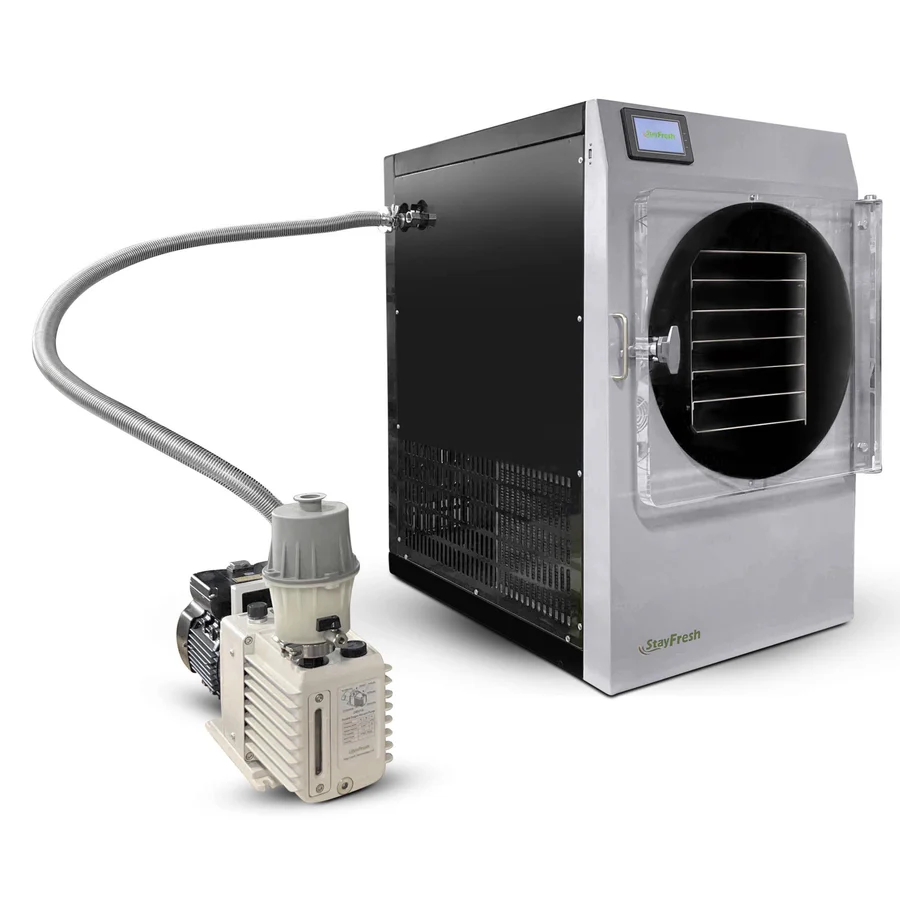
2. Primary Drying (Sublimation) — In a vacuum chamber, frozen water turns directly into vapor, removing about 95% of moisture.
3. Secondary Drying (Adsorption) — Remaining water molecules are removed, resulting in just 1-4% moisture content.
Because water is removed as vapor, the food’s shape, color, and aroma stay intact. When rehydrated, freeze-dried food returns remarkably close to its original fresh state.
Ready to Freeze Dry?
Whether you want to preserve food for yourself or develop a product for your business, WeFreezeDryIt can help.
Get a Free Quote