Can You Freeze Dry Meat Safely?
Yes. You can freeze dry meat — including beef, poultry, pork, and seafood — either raw or cooked. Freeze drying does not kill bacteria, so safe handling, cooking temperatures, and complete drying still matter.
University of Minnesota Extension states that meat, poultry, and seafood can be freeze-dried raw or cooked. The part most people miss is just as important: freeze drying does not kill bacteria, viruses, or parasites. It removes water so those microbes cannot grow, but it can preserve them. If moisture is added back, they can become active again (UMN Extension, reviewed 2025; USU Extension, January 23, 2026).
That is why cooked meat is often the more practical choice for meals you plan to store and reheat, and why WeFreezeDryIt reviews raw meat, poultry, and seafood projects case by case before processing them in Coronado, Panama.
What freeze drying does — and does not do — to meat
Freeze drying, also called lyophilization, happens in three steps (USU Extension, 2026, citing Nowak & Jakubczyk, 2020):
- Freezing, so the water in the meat becomes ice. USU describes this as usually below 0°F; UMN describes a colder range, around −30°F to −50°F.
- Primary drying (sublimation), when a vacuum turns that ice directly into vapor. Most of the water leaves without the shrinkage you get from a dehydrator.
- Secondary drying (desorption), which removes a little remaining bound moisture so the meat is dry enough to store.
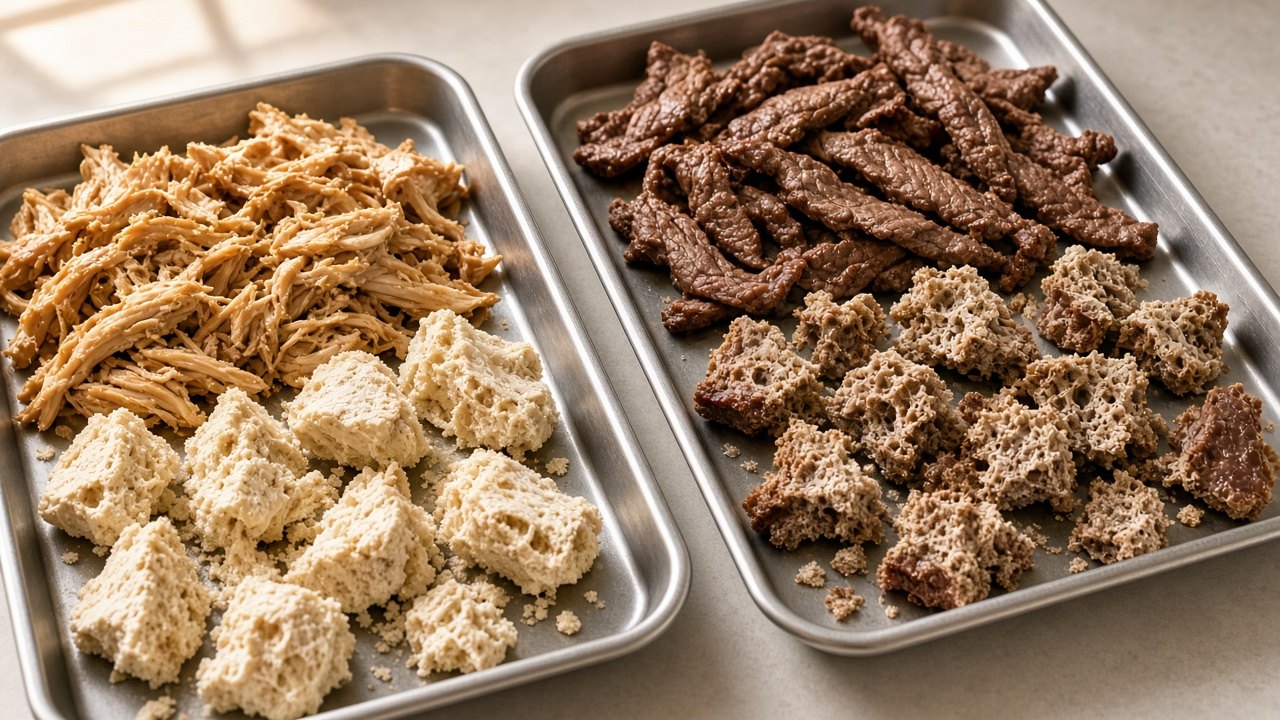
When the process is done correctly, water activity typically falls to about 0.3 or below, with many freeze-dried foods landing between 0.08 and 0.33 (USU; UMN). At those levels, bacteria and mold generally cannot grow, so properly dried and packaged meat can be stored at room temperature.
Low water activity is not sterility. UMN is direct: freeze drying has no heat-treatment step that inactivates illness-causing microorganisms, and those organisms “will be preserved and can start growing again if moisture is added back to the food.” USU’s food-safety specialists say the same: freeze drying “can preserve most foodborne bacteria, and even when they cannot grow, they are still a hazard.” Freeze drying preserves meat. It does not make unsafe meat safe.
Raw vs cooked: which should you choose?
Both are technically possible. The better choice depends on how you will use the meat later.
Cooked meat is usually simpler for household meals, travel food, and emergency storage. You cook it to a safe internal temperature, chill it quickly, freeze dry it, then package it. WeFreezeDryIt commonly evaluates cooked meals and prepared foods that already contain meat.
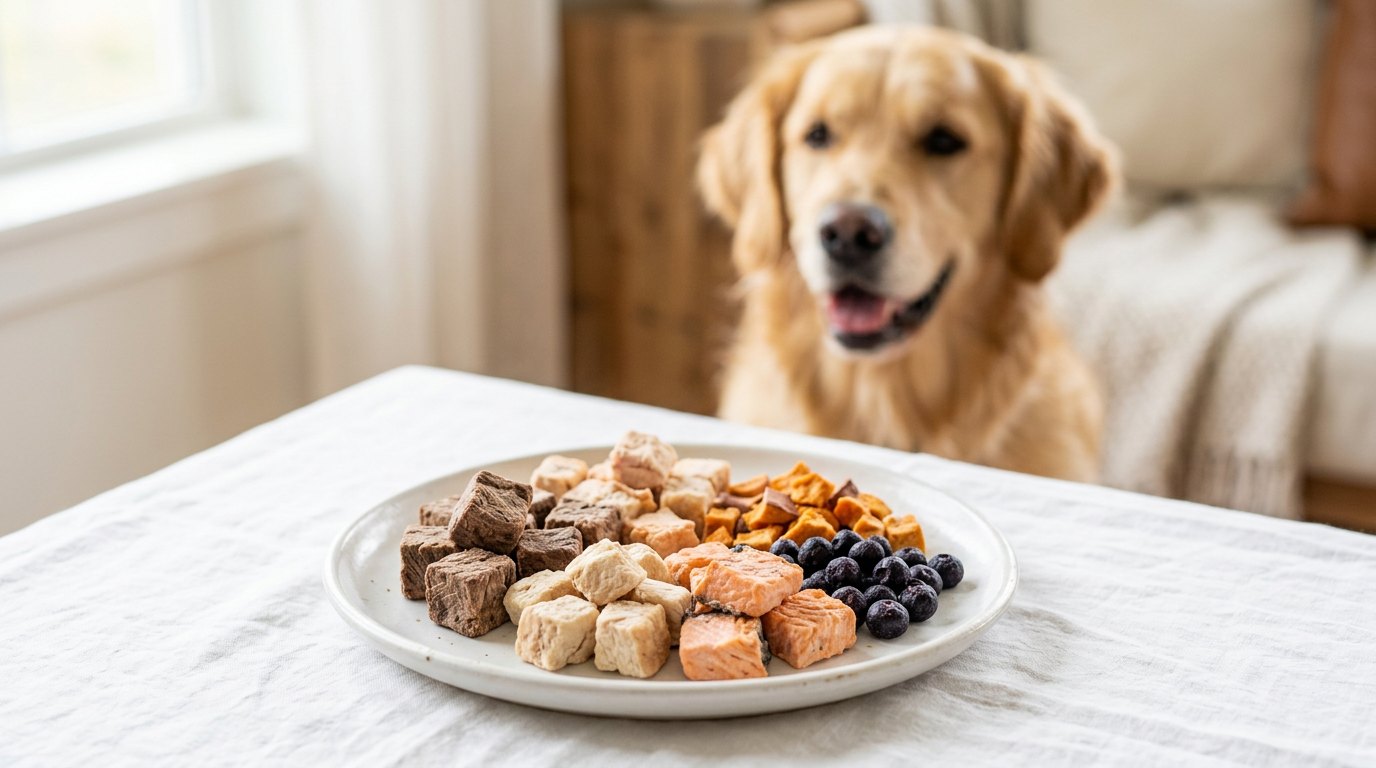
Raw meat can be freeze-dried, and some people prefer it for later cooking, homemade pet food, or product development. It is not ready to eat just because it came out of a freeze dryer. USU’s guidance is that meats and eggs should be cooked before freeze-drying or after rehydration. If you freeze dry raw chicken, it is still raw chicken afterward.
At WeFreezeDryIt, raw meats, poultry, and seafood require additional review so we can confirm composition, preparation, intended use, and handling. Raw projects intended as pet food are reviewed in that category, and they are not the same as food for people. Food that sat out too long is not a good candidate, cooked or raw.
USDA temperatures still apply
Freeze drying does not replace a food thermometer. Use the safe minimum internal temperatures published by USDA’s Food Safety and Inspection Service (Leftovers and Food Safety):
- Beef, pork, lamb, and veal steaks, chops, and roasts: 145°F, then a 3-minute rest before carving or eating.
- Ground beef, pork, lamb, and veal: 160°F.
- All poultry: 165°F.
- Leftovers, including leftover meat and mixed dishes: reheat to 165°F. USDA also says to bring leftover sauces, soups, and gravies to a rolling boil.
If the meat is freeze-dried raw, those same temperatures apply after rehydration, before you eat it. UMN notes that freeze-dried meats, poultry, seafood, and eggs you intend to cook should reach the safe minimum internal temperature for that food after they are rehydrated. For wild game, UMN recommends cutting the meat into pieces 6 inches thick or less and freezing it at 0°F or below for 30 days before preparing, as a parasite-control step.
These figures are consumer guidance, not a food-safety plan for resale. Products intended for sale need additional review.
Fat is the main quality limit
Freeze drying removes water. It does not remove oil or fat. That single fact explains most “it didn’t work” meat batches.
UMN’s advice for cooked ground beef is specific: drain it and thoroughly rinse it with water to remove as much grease as possible before freeze drying. “Foods that are high in fat or oil may not freeze-dry well.” USU and Arizona Cooperative Extension make the same broader point: high-fat foods are difficult or poor candidates, and fat can go rancid in storage even when the water is gone (Arizona Extension AZ2097a, 2025).
Lean, well-trimmed cuts usually dry more evenly and store better than fatty cuts, skin-on pieces, or heavily marbled meat. Bacon, fatty sausages, fried meat, and dishes sitting in grease are more likely to come out oily or have a shorter useful storage life. Gravy is often the weak point in an otherwise good leftover meal. Butter, oils, and very fatty products often do not freeze dry well.
If you are unsure whether a recipe is too fatty, ask for a quote or start with a test batch.
How to prepare meat so it dries evenly
These steps come from extension guidance, and they apply at home or when you send food to a service.
Start with good, safely handled meat. Freeze drying will not fix meat that was already spoiled or left too long in the temperature danger zone. USU and UMN both stress clean hands, trays, and work surfaces. UMN also recommends sanitizing trays after each use and keeping raw meat separate from foods that will be eaten without further cooking.
Cut the meat into uniform, bite-size pieces or thin slices. Thick roasts dry unevenly. Arizona Extension notes that freeze-drying cycles for most foods often run about 20 to 40 hours; thickness is one reason a load runs long. If you start from a cooked product, cook to the USDA temperatures above, then cool rapidly. USDA leftover guidance is to divide large amounts into shallow containers so the food reaches 40°F as quickly as possible.
UMN notes that freezing prepared food in a household freezer for 48 hours before the run may speed the process. We often pre-freeze trays for the same reason. Spread food in a single, even layer; crowded meat dries more slowly and is harder to check for doneness.
Do not rely on a machine beep alone. UMN’s doneness test is practical: take a piece from each tray, break it in half, and look for dark, moist spots in the center. If you see moisture, the load needs more time.
For food-by-food notes, see our pages on beef, chicken, pork, turkey, and the rest of the Can You Freeze Dry It? guide.
Leftover meat and holiday meals
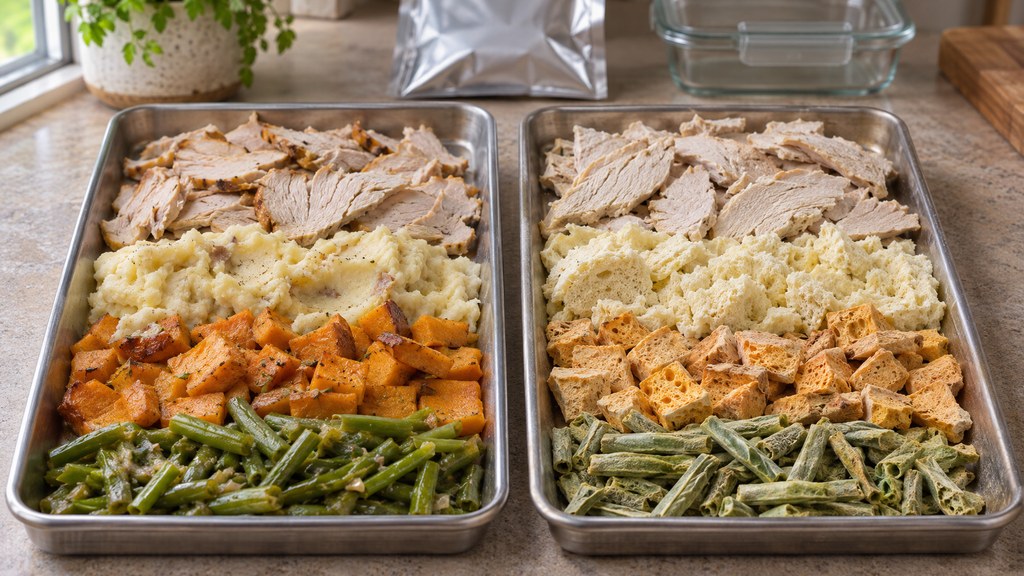
You can often freeze dry leftover turkey, roast, or stew — if the leftovers were handled safely first. USDA’s leftover rules still come first (FSIS):
- Refrigerate perishable leftovers within 2 hours of cooking or being taken off a warmer.
- If the surrounding temperature is above 90°F, that window shrinks to 1 hour. In much of Panama, the 1-hour rule is the one to use.
- Throw away perishable food that has been left out longer than that. Freeze drying cannot make it safe.
- Use refrigerated leftovers within 3 to 4 days, or freeze them if you need more time before a freeze-drying run.
- Reheat leftovers to 165°F.
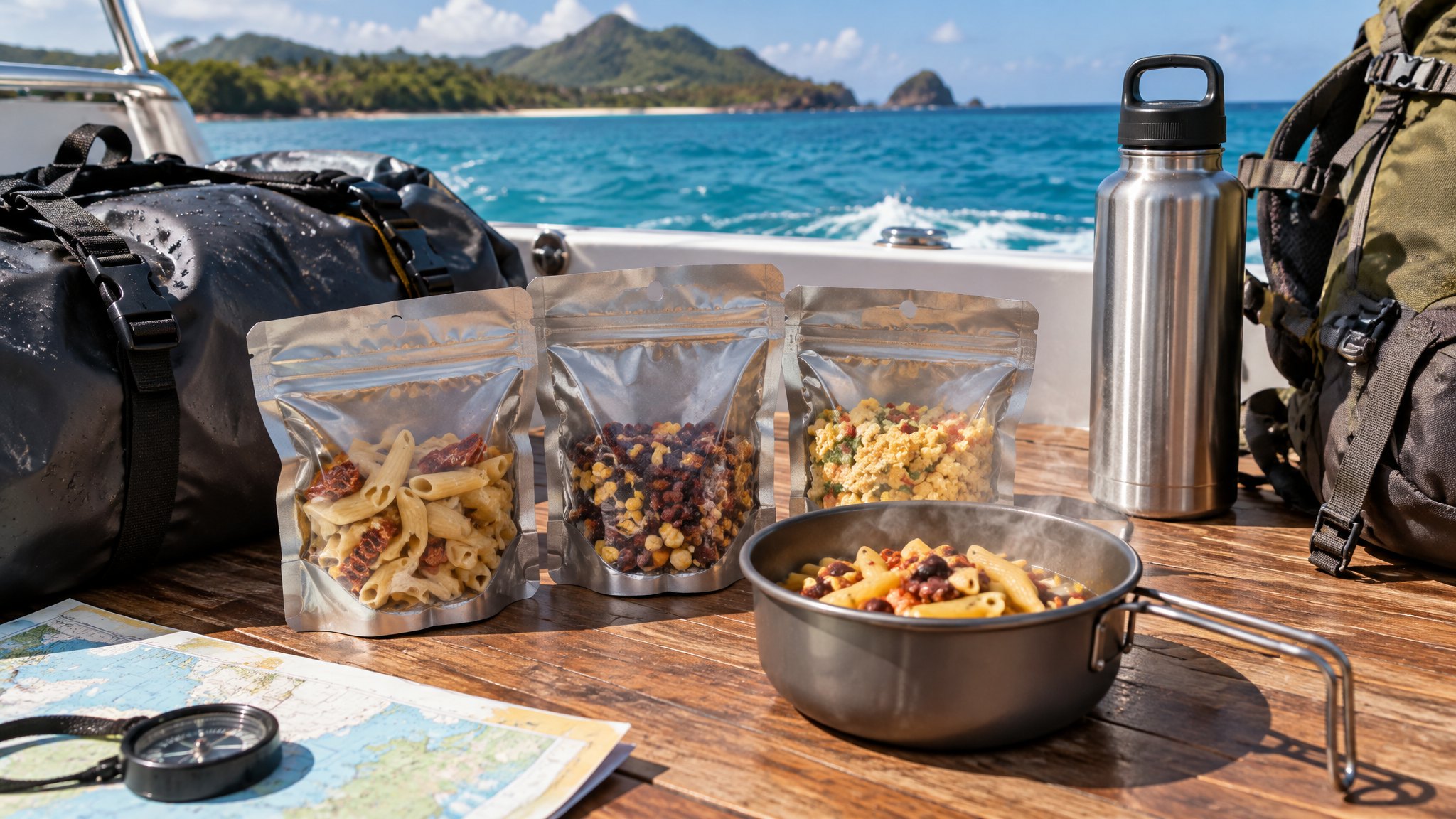
Skim extra grease from stews, and be cautious with very rich gravies. Cooked, trimmed turkey, shredded chicken, lean roast, and many soups and casseroles are better candidates than fried dishes. For travel and emergency use, see our freeze-dried meals service and the guide to meals for travel, boating, and preparedness in Panama.
How long does freeze-dried meat last?
There is no single official number that applies to every piece of freeze-dried meat, and it would be misleading to invent one.
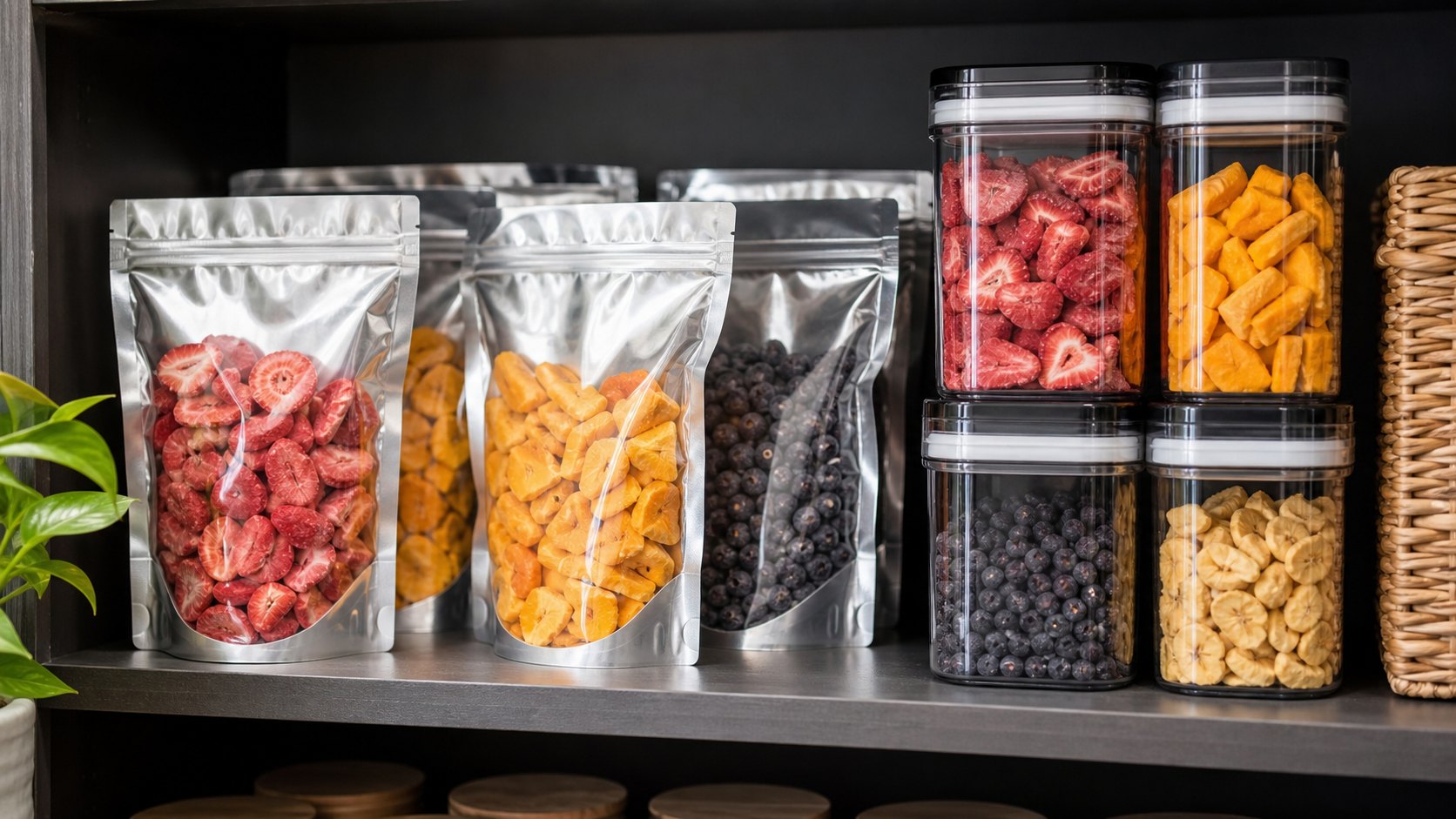
Packaging matters as much as the drying. UMN, citing USDA, says properly freeze-dried foods are shelf-stable and must be packaged in moisture-proof, hermetically sealed containers. If contaminated food is stored badly, microorganisms can grow again when moisture returns. Package the meat quickly; freeze-dried food picks up humidity from the air, which is an especially practical issue in Panama. See our notes on storing freeze-dried food and humidity and storage in Panama.
Use high-barrier packaging, such as Mylar foil pouches with oxygen absorbers, and store the packages in a cool, dark, dry place. Arizona Extension says dried foods keep quality best below 60°F, and that storage above 80°F to 90°F shortens quality much faster. Label every package with the food, whether it is raw or cooked, and the date.
Be careful with 25-year claims. UMN notes that home freeze-drying technology is relatively new, so shelf-life research for home-processed food is still limited. It also notes that commercially prepared freeze-dried foods can have a shelf life of up to 25 years. That figure is not a guarantee for homemade or high-fat meat. Fat rancidity, not bacterial growth, is often what limits useful life.
Lean, fully dry, well-packaged cooked meat, kept cool and dry, can remain convenient pantry food for a long time. Fatty meat, poor seals, heat, and humidity all shorten that window. If a package is puffed, stained, damp, or smells off, do not eat it. For broader storage guidance, see how long freeze-dried food lasts.
How to rehydrate and serve freeze-dried meat
Most meal meat is better rehydrated than eaten dry. UMN suggests weighing the tray before and after freeze drying; the weight difference is a reasonable first estimate of how much water or broth to add back. Add liquid a little at a time and give dense pieces a few minutes to absorb.
Meat that was freeze-dried raw must be cooked to the USDA safe minimum internal temperature after it is rehydrated. Cooked leftover-style meat and mixed dishes should be reheated to 165°F. For more technique, see rehydrating freeze-dried food. Once water is back in the food, it is perishable again, so refrigerate it or eat it promptly.
When a freeze-drying service makes sense
A quality home freeze dryer is a significant purchase, and a typical meat or meal cycle can occupy the machine for a day or more, plus defrost time. Many households and small food businesses in Panama only need occasional batches: a holiday surplus, a test product, a small pet-treat run, or a pantry of cooked meals.
WeFreezeDryIt is a done-for-you service based in Coronado, Panama Oeste. We freeze dry foods for families and businesses, package them in high-barrier pouches, and review unusual or raw-meat projects before they go in. A test batch is usually the lowest-risk way to try a recipe.
To request a quote, tell us what the meat or meal is, whether it is raw or cooked, the approximate quantity or fresh (wet) weight, how you plan to use it, and the packaging you prefer. Use the quote form on our homepage, or contact us in Panama at +507 6356-7777 or in Canada and the U.S. at +1 778-846-3791. We will give you an honest read on whether the product is a good candidate. Nothing in this article is a promise that every meat product will be accepted. See also our food safety page and FAQ.
Frequently asked questions
Can you freeze dry raw meat?
Yes, some raw meats can be freeze-dried, but that does not make them ready to eat. Cook them to a safe internal temperature after rehydration, unless they were fully cooked beforehand. WeFreezeDryIt reviews raw meat, poultry, and seafood projects case by case.
Does freeze drying kill bacteria in meat?
No. University of Minnesota Extension and Utah State University Extension both state that freeze drying does not kill illness-causing microorganisms. It can preserve them in a dormant state, and they may become active again when the meat is rehydrated.
What temperature should meat reach before or after freeze drying?
Use USDA FSIS minimums: 145°F with a 3-minute rest for steaks, chops, and roasts of beef, pork, lamb, or veal; 160°F for those meats when ground; 165°F for all poultry; and 165°F when reheating leftovers. If meat was freeze-dried raw, cook it to the correct temperature after rehydration.
How long does freeze-dried meat last?
It depends on how lean the meat is, how completely it was dried, and how it is packaged and stored. Seal it in moisture-proof packaging and keep it cool, dark, and dry. A 25-year shelf life is sometimes cited for commercial freeze-dried foods, but that is not a researched guarantee for home-processed or fatty meat.
Can you freeze dry leftover turkey or other leftover meat?
Yes, if the leftovers were cooled and refrigerated on time. USDA says to refrigerate perishable leftovers within 2 hours, or within 1 hour if the temperature is above 90°F, and to use them within 3 to 4 days in the refrigerator. Food left out too long should be thrown away, not freeze-dried.
Why doesn’t fatty meat freeze dry well?
Freeze drying removes water, not fat. Grease can keep a product from drying evenly and can go rancid in storage. UMN recommends draining and rinsing cooked ground beef to remove as much grease as possible before freeze drying.
Can WeFreezeDryIt freeze dry meat in Panama?
We evaluate cooked meat and meat-based meals regularly, and we can discuss raw meat, poultry, seafood, and pet-food projects after an additional review. Send a short description and quantity through our quote form and we will tell you whether it is a good fit.
Do I need to cook freeze-dried meat before eating it?
If it was freeze-dried raw, yes — cook it to the USDA safe temperature after rehydration. If it was fully cooked beforehand, reheat leftovers and mixed dishes to 165°F.
Sources
- University of Minnesota Extension, Preserving food at home: Freeze-drying (reviewed 2025), Amy Johnston.
- Utah State University Extension, Can I Freeze-Dry That? A Practical Guide to Safe and Effective Freeze-Drying (January 23, 2026), Victoria Carlile, Morgan Wayment, and Jose Brandao.
- USDA Food Safety and Inspection Service, Leftovers and Food Safety.
- University of Arizona Cooperative Extension, Basics of Home Freeze Drying (AZ2097a) (January 2025), Margine Bawden, Amy Robertson, and Cindy Pearson.
- Nowak, D., & Jakubczyk, E. (2020). The freeze-drying of foods. Foods, 9(10), 1488. https://doi.org/10.3390/foods9101488.
Freeze-drying results vary by food, formulation, preparation, processing conditions, packaging, and storage. Figures mentioned here are general educational estimates from the cited sources and should not be read as guaranteed laboratory results for every product. This article is for education, not formal food-safety or regulatory advice.
Freeze-drying results vary by food, formulation, preparation, processing conditions, packaging and storage. Figures shown on this website are general educational estimates and should not be interpreted as guaranteed laboratory results for every product. Food safety & our process
Ready to Freeze Dry?
Whether you want to preserve food for yourself or develop a product for your business, WeFreezeDryIt can help.
Get a Free Quote