Can You Freeze Dry Leftover Meals? Thanksgiving and Everyday Leftovers
Yes. You can freeze dry most leftover meals — turkey, mashed potatoes, vegetables, soups, rice, pasta, and casseroles — if they were handled safely first. Freeze drying does not kill bacteria, so USDA leftover rules still apply.
Freeze drying removes water so bacteria cannot grow, but it does not kill them. USDA's leftover rules still decide what is safe to keep: refrigerate within 2 hours of cooking (1 hour if it is above 90°F), use or freeze refrigerated leftovers within 3 to 4 days, and reheat to 165°F before eating (USDA FSIS; UMN Extension).
The other limit is fat. Lean, well-drained dishes freeze dry well. Greasy gravies, buttery sides, fried foods, and mayonnaise salads usually do not.
Thanksgiving is Thursday, November 26, and plenty of households in Panama will end the weekend with more turkey and sides than they can eat. Here is what is worth freeze drying, how to prepare it, and how to store and reheat it safely.
Quick answer: what freeze dries well and what does not
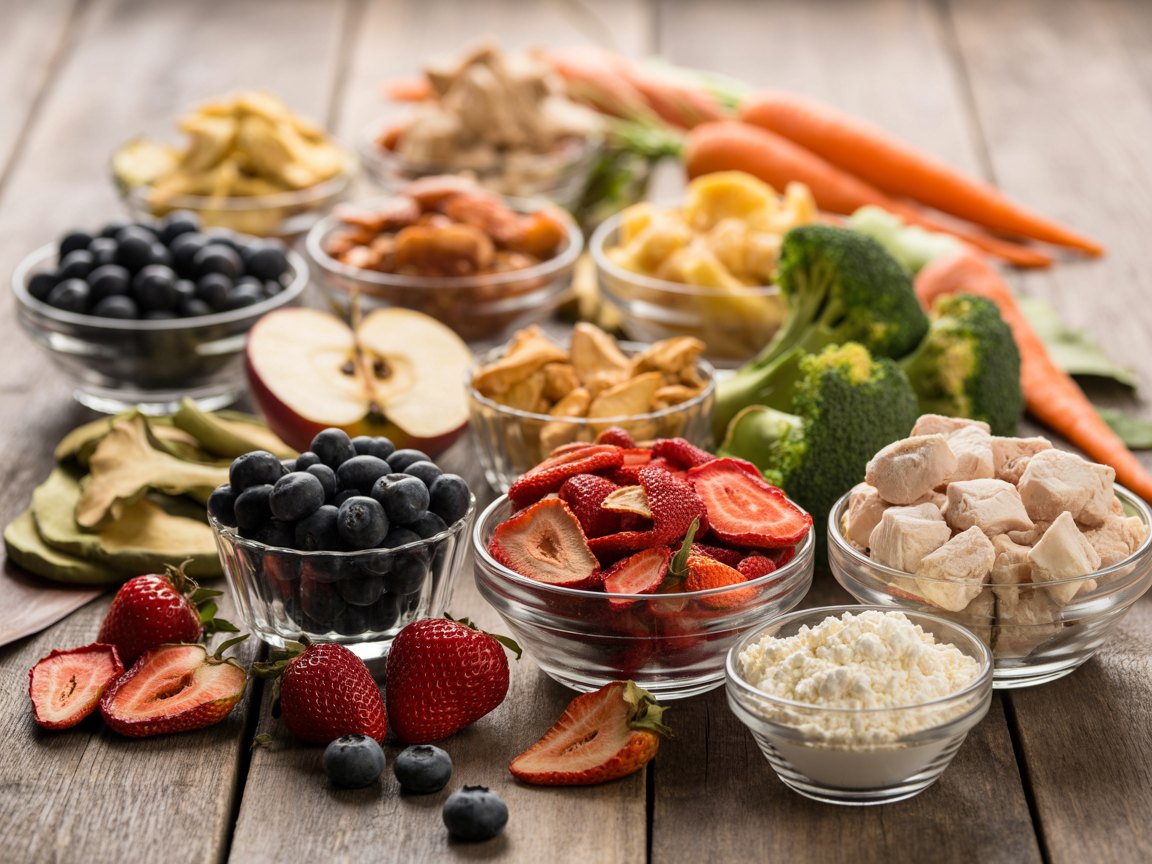
Usually good candidates (cooked, cooled on time, not greasy):
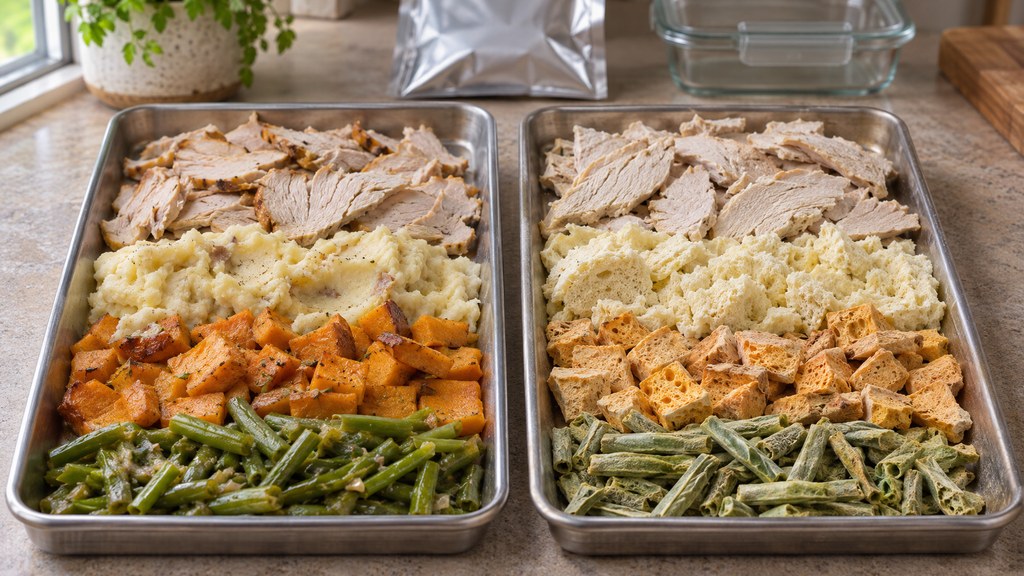
- Sliced or diced turkey breast and lean roast meat, with skin and visible fat removed
- Mashed potatoes, sweet potatoes, and other cooked starches
- Green beans, carrots, corn, peas, and other cooked vegetables
- Broth-based soups, stews, and chili with the fat skimmed off
- Rice, pasta, beans, and casseroles that are not overly greasy
Possible, with care (test a small amount first):
- Gravy and sauces — they can work if skimmed, thickened, and spread thin, but emulsions may separate
- Stuffing and dressing — depends heavily on how much butter or sausage fat is in it
- Cranberry sauce and other very sweet sides — high sugar dries slowly and may stay sticky
Usually poor candidates (fat, sugar, or safety problems):
- Mayonnaise-based salads, salad dressings, and oily dishes
- Fried foods, skin-on fatty pieces, and pan drippings
- Butter, oils, honey, syrups, and jams on their own
- Pies, rolls, and other baked goods, which home freeze-drying guidance does not recommend
- Any leftovers that sat out too long, no matter what they are
The rest of this guide explains why.
Rule #1: leftovers must be safe before they are freeze-dried
University of Minnesota Extension explains that there is no heat-treatment step in freeze drying, so it does not kill illness-causing bacteria or viruses. If they are present, they "will be preserved and can start growing again if moisture is added back to the food." Utah State University Extension says the same thing: freeze drying keeps food from spoiling, but it does not make it safer (USU Extension, January 23, 2026).
So the clock starts the moment the meal comes off the stove or out of the oven. USDA's Food Safety and Inspection Service gives clear rules for leftovers (Leftovers and Food Safety):
- Refrigerate within 2 hours of cooking, or within 2 hours of taking food off a warmer.
- Within 1 hour if the temperature is above 90°F. On a hot day in Panama, or at an outdoor gathering, use the 1-hour rule.
- Throw away perishable food left out longer than that. Freeze drying cannot rescue it.
- Cool food fast. Divide large amounts into shallow containers so they reach 40°F or below quickly. For roasts and turkey, cut the meat into smaller pieces; FSIS says to slice breast meat, while legs and wings may be left whole.
- Use refrigerated leftovers within 3 to 4 days, or freeze them.
For a holiday bird, FSIS adds two practical points in Turkey Basics: Handling Cooked Dinners: remove all stuffing from the turkey cavity right away and refrigerate it separately, and refrigerate potatoes, gravy, and vegetables in shallow containers.
If you are not ready to freeze dry within 3 to 4 days, freeze the leftovers. FSIS notes that leftovers can be frozen for 3 to 4 months for best quality, and that food kept frozen remains safe, although it can lose moisture and flavor over time. Frozen, portioned leftovers are also a good head start for freeze drying, because the food needs to be frozen solid anyway.
Which Thanksgiving leftovers freeze dry best
Turkey and other leftover meat
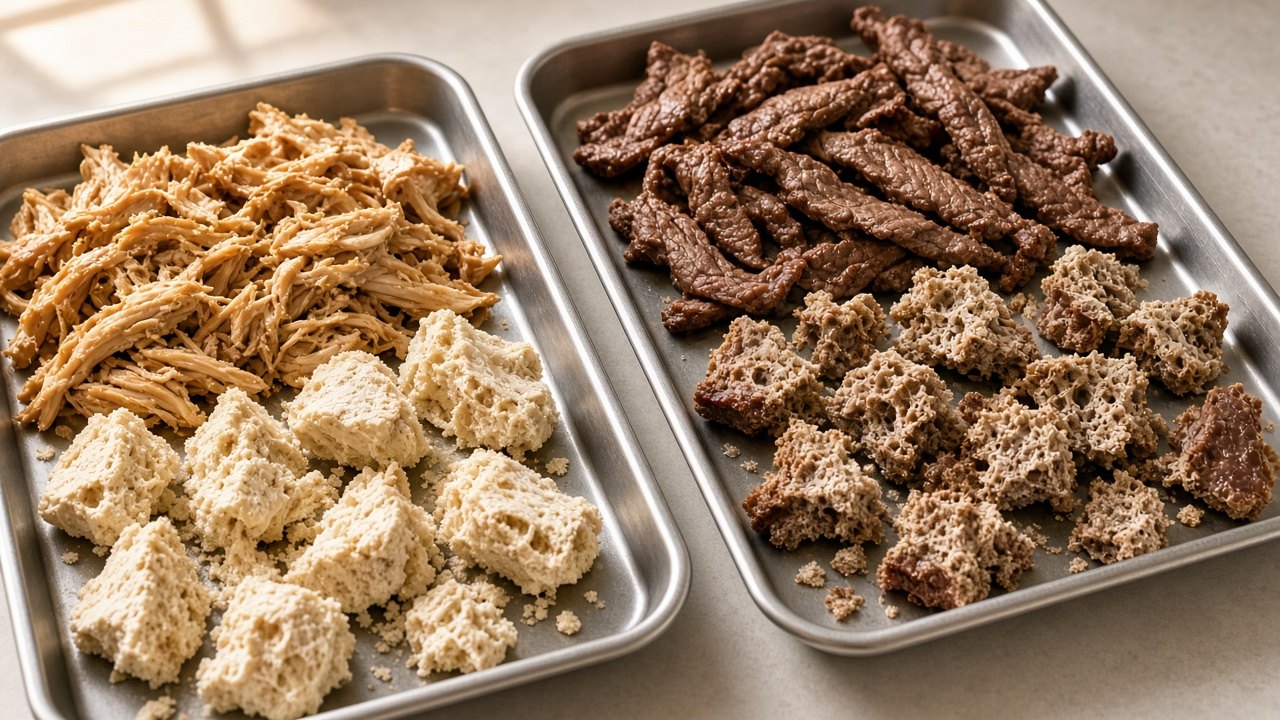
Turkey breast is one of the easiest holiday leftovers to freeze dry. It is lean, it slices well, and it rehydrates nicely in soups, casseroles, and rice dishes. Remove the skin, bones, and visible fat first. University of Arizona Cooperative Extension recommends removing as much bone and fat as possible and cutting meat into pieces no thicker than ¾ inch (AZ2097b, 2025). Dark meat works too, but it carries more fat, which can shorten its useful storage life.
Trim ham and other cured meats well. For more detail on cooked versus raw meat, cooking temperatures, and fat, see our guide Can you freeze dry meat safely? and our food notes for turkey and ham.
Mashed potatoes, sweet potatoes, and stuffing
Cooked starches are good candidates. USU's guidance for cooked starches is to mash or slice them thinly so they dry consistently. Mashed potatoes and sweet potatoes become light, crumbly pieces that rehydrate with hot water or broth.
The catch is the butter and cream that make holiday sides taste good. Freeze drying removes water, not fat. A side that is swimming in butter, or a stuffing made with a lot of sausage drippings, may not dry evenly and can go rancid in storage. Arizona Extension lists butter, oils, peanut butter, honey, syrup, jam, and chocolate among foods that should not be freeze-dried as the sole ingredient, although they can usually work as a smaller ingredient in a recipe. Lighter versions of these sides freeze dry better than very rich ones.
Vegetables
Green beans, carrots, corn, peas, and squash generally freeze dry well, especially if they were cooked plainly. Casserole-style vegetables in a heavy cream sauce are more hit-and-miss. See our pages on green beans, corn, and pumpkin.
Gravy and sauces
Gravy is often the weak point. USU says homemade sauces and gravies can be freeze-dried, but emulsions may separate; it suggests using thickeners and spreading them thinly. Pan-dripping gravy can also be high in fat, so chill it and lift off the solid fat before it goes on a tray. When you reheat gravy later, FSIS says to bring sauces, soups, and gravies to a rolling boil.
Cranberry sauce, pies, and rolls
Very sweet sides are slow to dry. USU notes that high-sugar foods hold onto water and resist moisture loss. Whole-berry cranberry sauce may come out sticky rather than crisp. UMN says home freeze-drying equipment does not work well for baked goods, so pie, rolls, and cornbread are usually better eaten fresh or frozen the normal way.
Everyday leftovers work too
The same rules apply all year. Good everyday candidates include:
- Soups, stews, and chili, with excess fat skimmed off
- Rice, pasta, and beans — Arizona Extension recommends cooking beans and grains before freeze drying
- Casseroles and mixed dishes such as lasagna — Arizona Extension says casseroles and mixed foods freeze dry well if they are not overly greasy
- Cooked shredded chicken, lean beef, and scrambled eggs
Weak candidates include mayonnaise-based salads, oily stir-fries, fried foods, and anything with a lot of butter or oil. USU puts oils and mayonnaise in its "not safe or practical" group because the fat prevents adequate drying.
How to prepare leftovers for freeze drying
- Cool and refrigerate on time. Follow the 2-hour (or 1-hour) rule above, using shallow containers.
- Separate the meal. Keep turkey, potatoes, vegetables, and gravy apart rather than freeze drying a mixed plate. They dry at different rates, and separate pouches are easier to use later.
- Trim and drain. Remove skin, bones, and visible fat. Skim chilled soups and gravies. UMN recommends draining and rinsing cooked ground beef to remove as much grease as possible.
- Cut small and spread thin. Arizona Extension recommends meat pieces no thicker than ¾ inch and casseroles or mixed foods spread no thicker than about ½ inch. Spread food in a single, even layer.
- Pre-freeze. UMN says freezing prepared food for 48 hours before filling the trays may speed the process; Arizona Extension suggests at least 24 hours.
- Keep strong flavors apart. Arizona Extension recommends drying strongly flavored or spiced dishes on their own so their odor does not carry into other foods.
- Label everything. UMN suggests labeling each package with the food, whether it is raw or cooked, and the date.
Plan for time. USU notes that thick foods such as meat or casseroles can take more than 2 days to fully dry, which is why thin, even portions matter. Before packaging, test for doneness: UMN suggests breaking a piece from each tray in half and checking for dark, moist spots in the center.
Storing freeze-dried leftovers
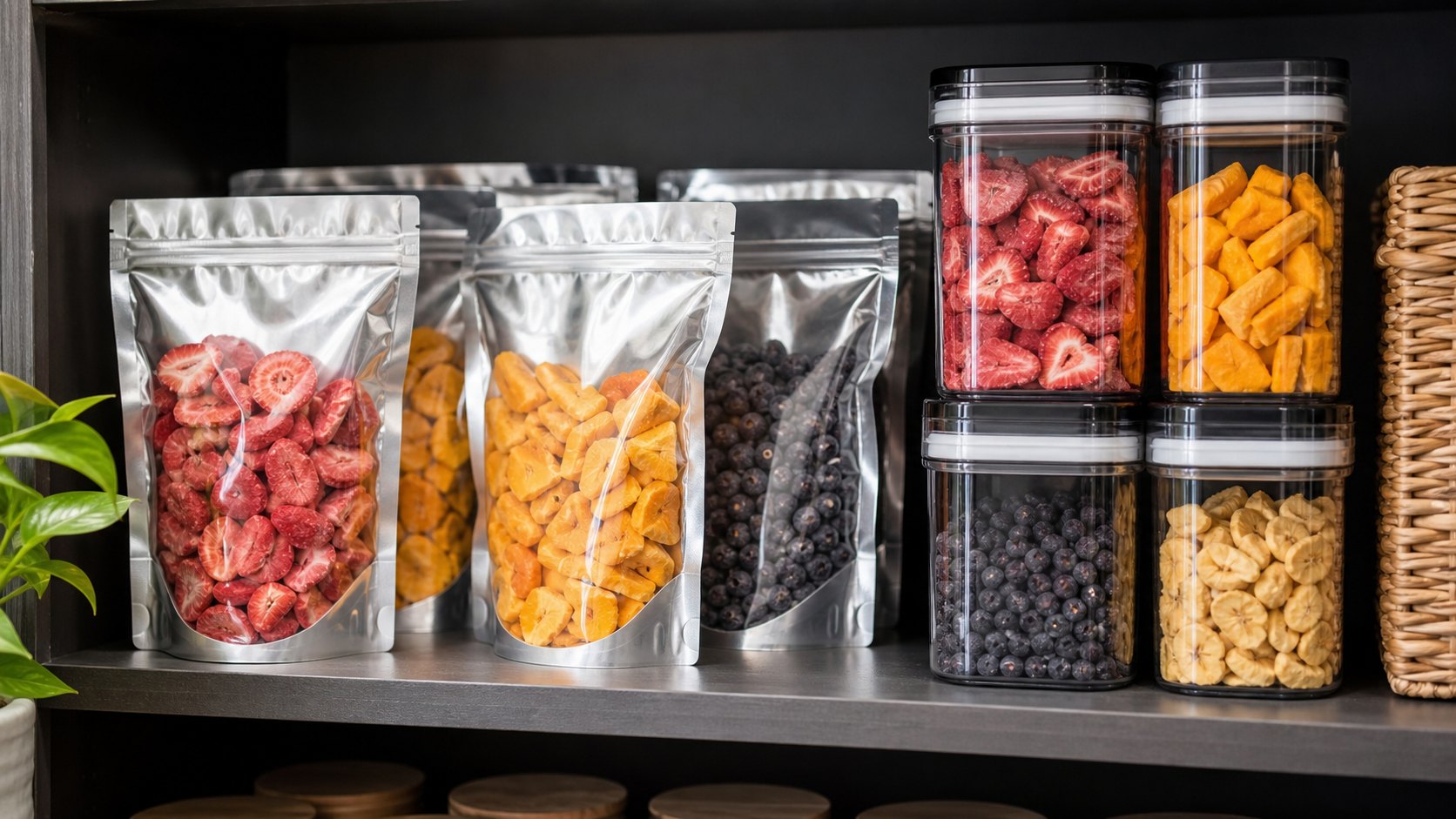
Freeze-dried food pulls moisture from the air quickly, so it should be packaged right away. UMN, citing USDA, says properly freeze-dried foods must be packaged in moisture-proof, hermetically sealed containers. USU recommends thick Mylar bags without clear windows, paired with oxygen absorbers, for the best long-term protection, and storage in a cool, dark, dry place.
That is especially important in Panama's humidity. See our notes on storing freeze-dried food and humidity and freeze-dried storage in Panama.
How long will they last? Be cautious with big numbers. UMN notes that shelf-life information for home freeze-drying is limited, even though commercially prepared freeze-dried foods can last up to 25 years. USU says home freeze-dried products are not recommended for consumption beyond 5 to 10 years after processing. Leftover meals with fat in them — dark meat, buttery sides, gravy — will usually have a shorter useful life than lean, plain foods. For more, see how long freeze-dried food lasts.
If a package is puffed, damp, stained, or smells off, throw it out.
Rehydrating and reheating leftovers safely
Most leftover meals are meant to be rehydrated, not eaten dry. UMN suggests weighing the trays before and after freeze drying; the weight lost is a good starting point for how much water or broth to add back. Add hot liquid a little at a time and let dense pieces soak for several minutes.
Once water goes back in, the food is perishable again. Treat it like fresh leftovers:
- Reheat leftovers to 165°F, checked with a food thermometer (USDA FSIS).
- Bring gravies, sauces, and soups to a rolling boil (USDA FSIS).
- Refrigerate or eat rehydrated food promptly.
Our rehydrating guide has more technique.
Is it worth freeze drying leftovers?
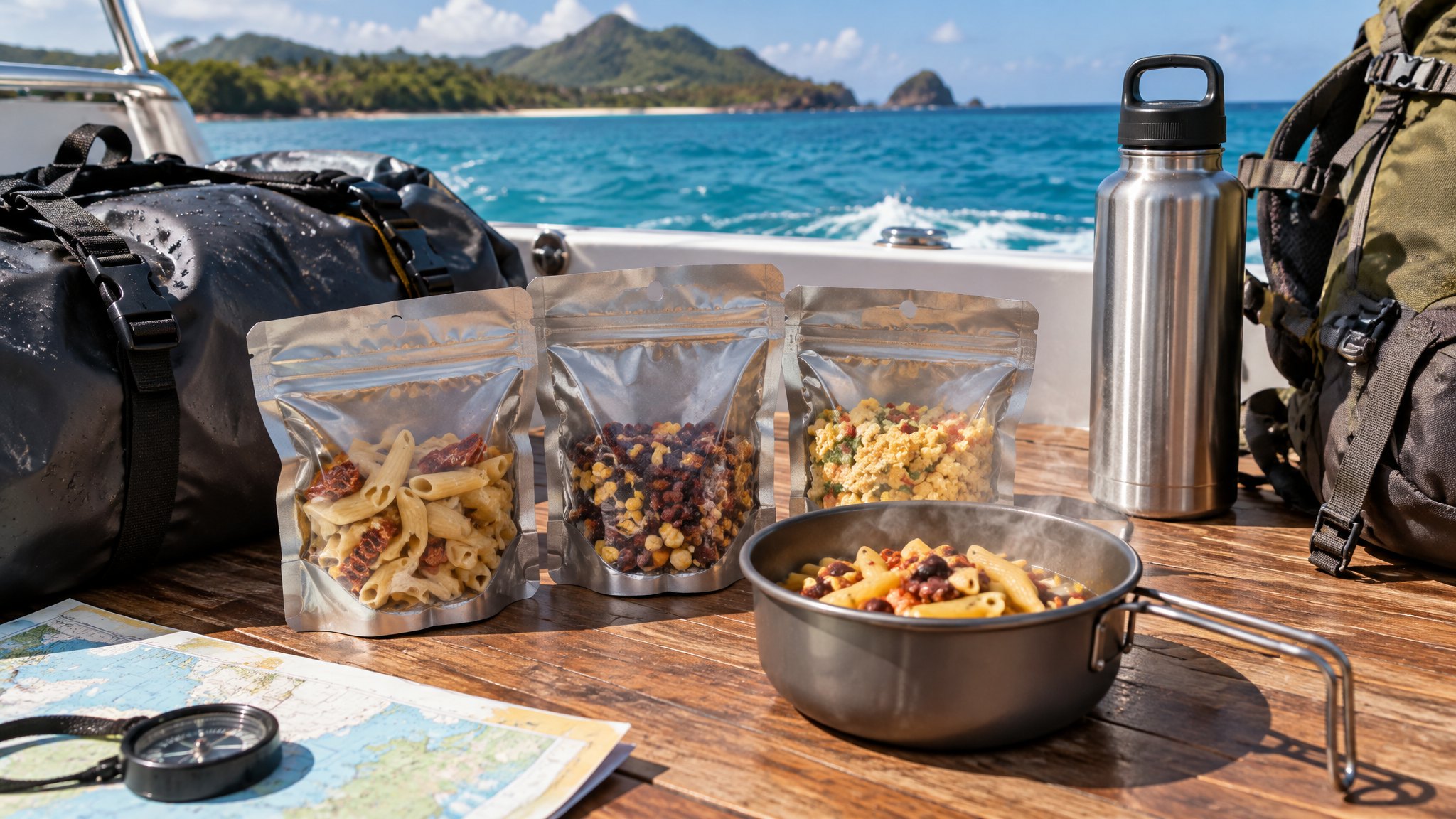
For one dinner's worth of leftovers, the freezer is usually simpler. Freeze drying makes sense when you want leftovers to become lightweight meals for a boat trip, a shelf-stable pantry for power outages, or cooked turkey and potatoes that do not take up freezer space. See freeze-dried meals for travel, boating, and emergencies in Panama.
A freeze dryer runs one load for a day or more, and many families only need that capacity a few times a year, so a service can make more sense than buying a machine. See buying a freeze dryer vs. using a service and what professional freeze drying costs.
Freeze drying leftover meals with WeFreezeDryIt
WeFreezeDryIt is a done-for-you freeze-drying service in Coronado, Panama. We freeze dry cooked meals and prepared foods for households and small businesses, and we package them in high-barrier pouches. Projects are reviewed before processing, and some items, such as raw meat, dairy-heavy dishes, very fatty or very sugary foods, and products for resale, need additional review. Nothing is accepted automatically.
If you have holiday leftovers you would like to keep, the safest plan is simple: cool them on time, portion them, and freeze them within 3 to 4 days. Then send us a quote request with what the dishes are, roughly how much you have, how you plan to use them, and the packaging you prefer. We will tell you honestly which dishes are good candidates and which are better left in your freezer. To try a favorite recipe first, start with a test batch. You can also reach us in Panama at +507 6356-7777 or in Canada and the U.S. at +1 778-846-3791. See our food safety page and FAQ for more.
Frequently asked questions
Can you freeze dry Thanksgiving leftovers?
Yes, many of them. Sliced turkey breast, mashed potatoes, sweet potatoes, vegetables, and broth-based soups are usually good candidates. They must be refrigerated within 2 hours of cooking (1 hour above 90°F) and used or frozen within 3 to 4 days. Very greasy gravy, butter-heavy sides, and baked goods are weaker candidates.
Does freeze drying make old leftovers safe again?
No. Freeze drying does not kill bacteria; University of Minnesota Extension and Utah State University Extension both say it preserves them, and they can grow again when water is added back. Food that sat out too long or is past 3 to 4 days in the refrigerator should be thrown away, not freeze-dried.
Can you freeze dry leftover turkey?
Yes. Remove the skin, bones, and visible fat, slice or dice the meat no thicker than about ¾ inch, and spread it in a single layer. Lean breast meat stores better than dark meat or skin-on pieces. Reheat rehydrated turkey to 165°F before eating.
Can you freeze dry gravy?
Sometimes. Utah State University Extension says sauces and gravies can be freeze-dried, but emulsions may separate, so thicken them and spread them thin. Chill gravy first and remove the solid fat. When you reheat it, bring it to a rolling boil.
How long do freeze-dried leftovers last?
It depends on fat content, how completely they were dried, and how they are packaged and stored. Use moisture-proof packaging with oxygen absorbers and keep it cool, dark, and dry. Utah State University Extension does not recommend eating home freeze-dried foods beyond 5 to 10 years after processing; fatty leftovers usually have a shorter useful life.
How do you reheat freeze-dried leftovers?
Add hot water or broth a little at a time until the food is rehydrated, then reheat it to 165°F as measured with a food thermometer. Bring gravies, sauces, and soups to a rolling boil. Once rehydrated, the food is perishable again.
Can WeFreezeDryIt freeze dry my leftovers in Panama?
We freeze dry cooked meals and prepared foods in Coronado, and each project is reviewed first. Freeze your portioned leftovers within 3 to 4 days, then send a short description, the quantity, and your intended use through our quote form. We will tell you which dishes are good candidates.
Sources
- USDA Food Safety and Inspection Service, Leftovers and Food Safety (last updated July 31, 2020).
- USDA Food Safety and Inspection Service, Turkey Basics: Handling Cooked Dinners (last updated September 25, 2024).
- University of Minnesota Extension, Preserving food at home: Freeze-drying (reviewed 2025), Amy Johnston.
- Utah State University Extension, Can I Freeze-Dry That? A Practical Guide to Safe and Effective Freeze-Drying (January 23, 2026), Victoria Carlile, Morgan Wayment, and Jose Brandao.
- University of Arizona Cooperative Extension, Freeze Drying 101: Preparing and Storing Your Freeze Dried Products for Best Use (AZ2097b) (February 2025), Amy Robertson, Margine Bawden, and Cindy Pearson.
Freeze-drying results vary by food, recipe, preparation, processing conditions, packaging, and storage. Figures here are general educational guidance from the cited sources, not guaranteed results for every dish. This article is for education, not formal food-safety or regulatory advice.
Freeze-drying results vary by food, formulation, preparation, processing conditions, packaging and storage. Figures shown on this website are general educational estimates and should not be interpreted as guaranteed laboratory results for every product. Food safety & our process
Ready to Freeze Dry?
Whether you want to preserve food for yourself or develop a product for your business, WeFreezeDryIt can help.
Get a Free Quote