How Long Do Freeze-Dried Treats Last? Candy, Fruit, and Pet Treats
Sealed and stored cool, dark, and dry, most freeze-dried treats stay safe for years, but their crunch and flavor fade sooner, and opening the bag speeds that up. Low-fat candy and fruit keep best; fatty treats and pet treats need more care.
There is no single expiration date that fits every treat. University of Minnesota Extension says shelf-life research on home freeze-drying is still limited, while commercially prepared freeze-dried foods can last up to 25 years (UMN Extension). Utah State University Extension does not recommend eating home freeze-dried products more than 5 to 10 years after processing (USU Extension, January 23, 2026). For treats, the real limit is usually moisture, fat, and how often the bag gets opened.
This is the season for treat questions: candy for stocking stuffers, fruit snacks for gift bags, and pet treats for the dog who gets a present too. Here is how long each kind really lasts, what shortens its life, and how to tell when a treat is past its best.
Quick answer by treat type
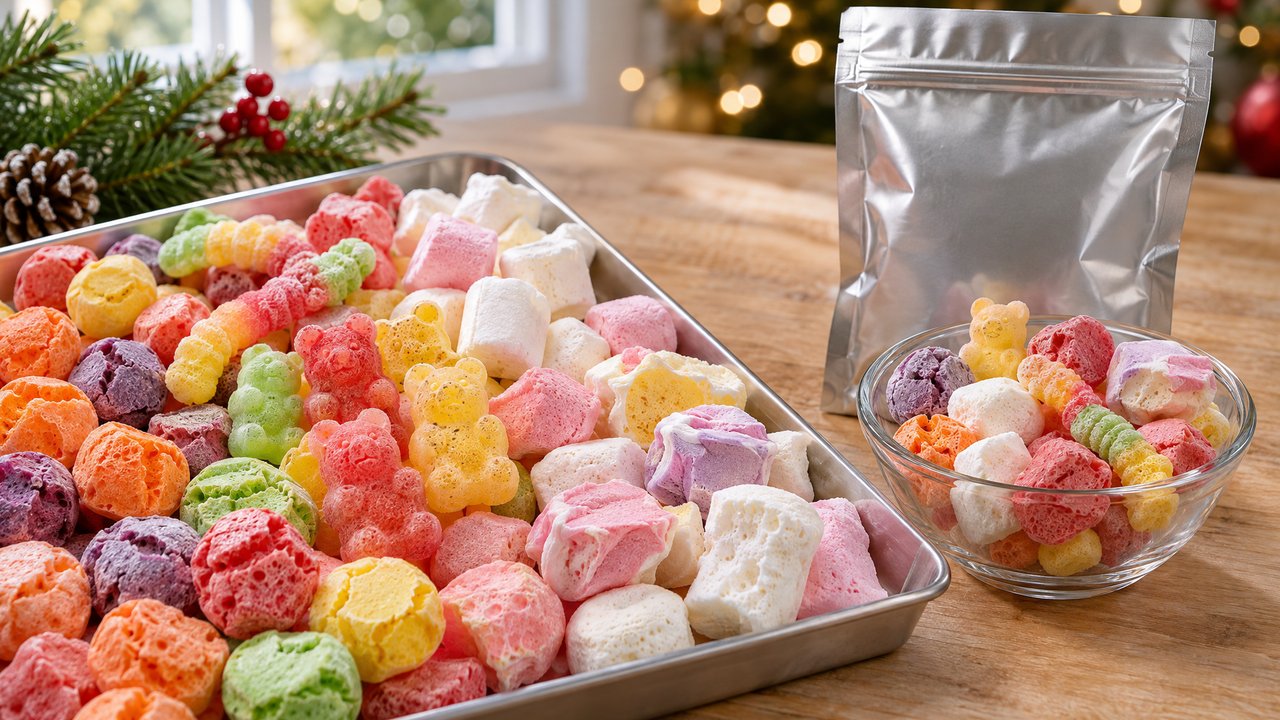
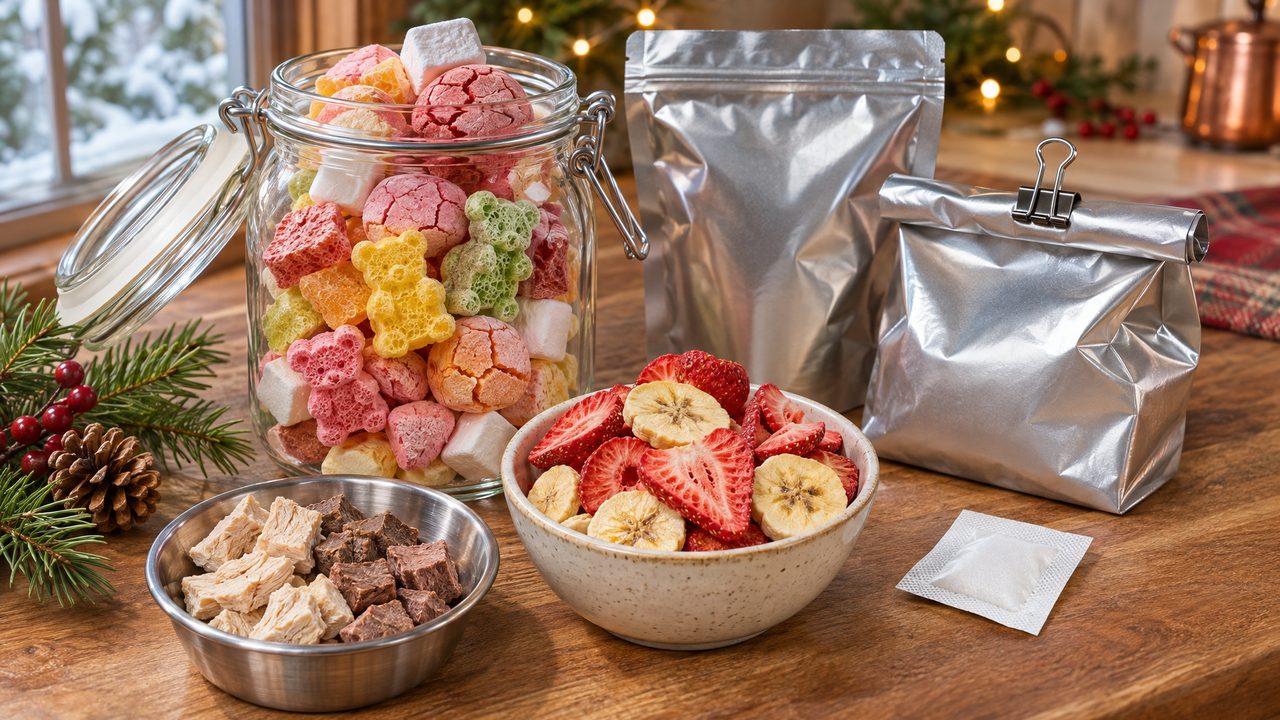
- Freeze-dried candy (fruit chews, gummies, marshmallows): low risk and low fat, so it stores well while sealed. It usually fails by going soft or sticky after it picks up moisture, not by becoming unsafe.
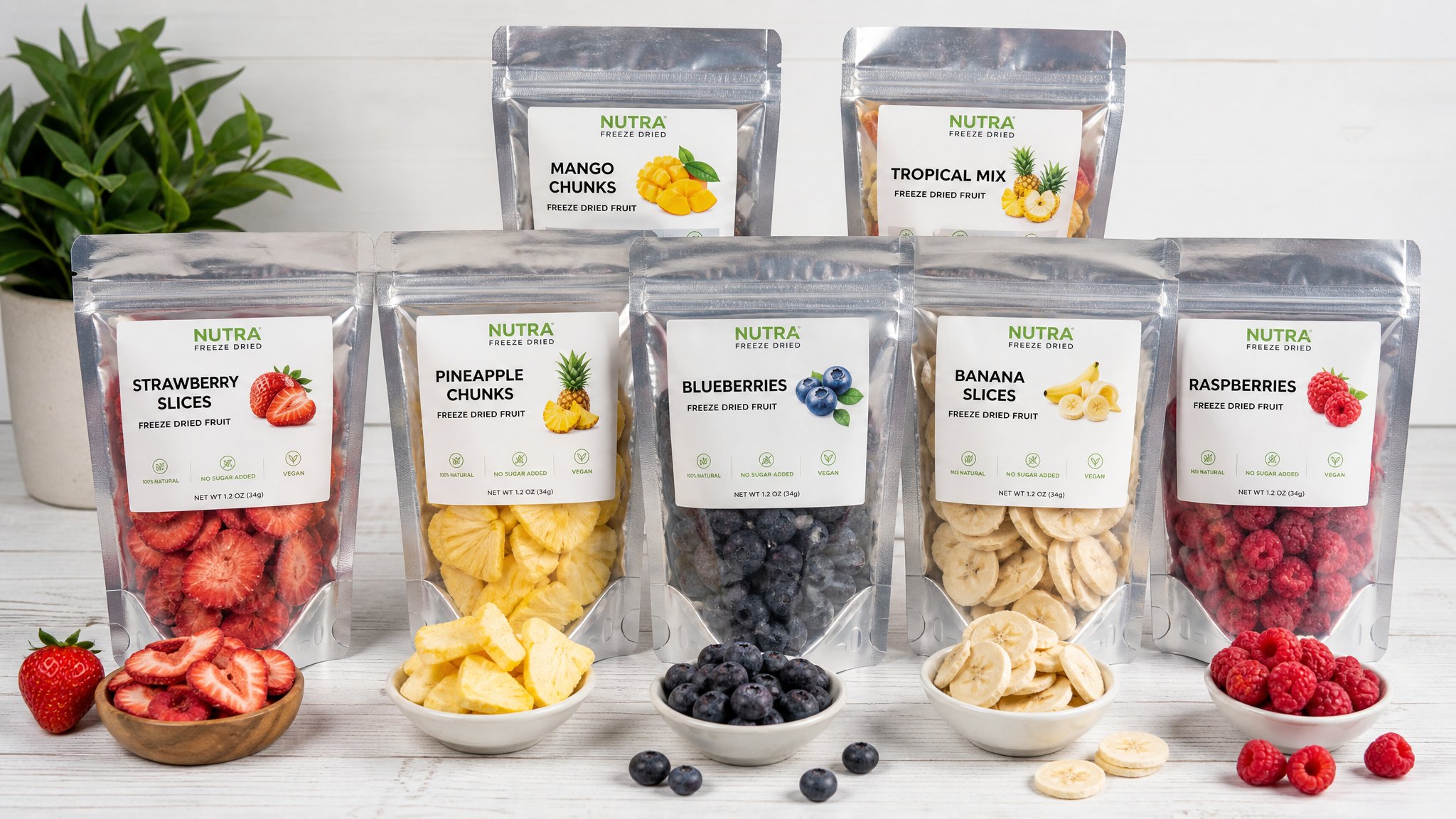
- Freeze-dried fruit snacks (strawberries, banana, mango): among the best keepers. USU Extension notes that fruit is safe to eat dry, because bacteria and mold cannot grow at that low moisture level. Texture is the first thing to go once air gets in.
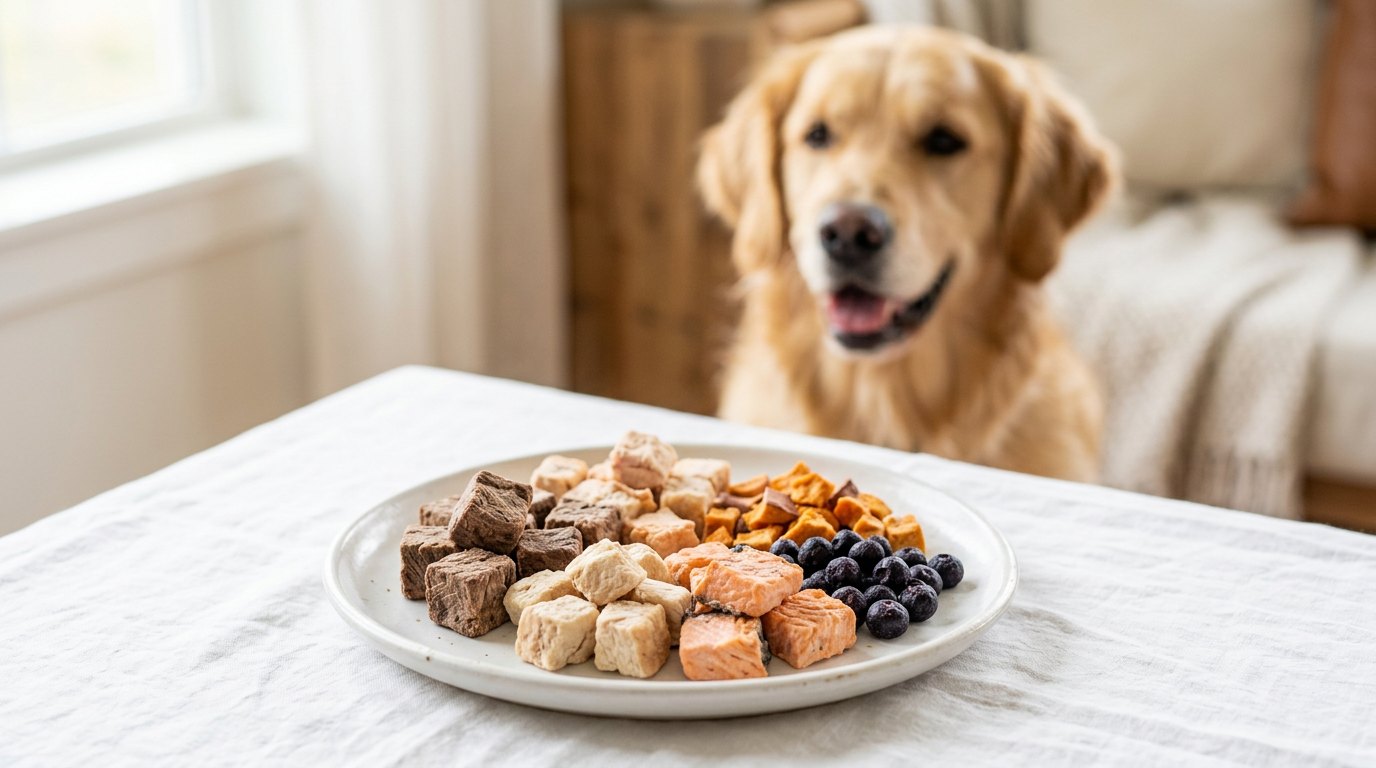
- Freeze-dried pet treats (lean meat, liver, fish): the most variable. Fat content, whether the meat was raw or cooked, and how often the bag is opened all matter. Raw meat treats also need careful handling, even while they are dry.
- Treats with chocolate, nut butter, butter, or caramel: the weakest keepers. Freeze drying removes water, not fat, and high-fat foods are more likely to go rancid.
Two different questions: is it safe, and is it still good?
Safety depends on keeping the treat dry. USU Extension explains that proper freeze drying lowers water activity to about 0.3 or below, and at that level most bacteria and spoilage organisms cannot grow. UMN Extension's cottage-food guidance puts the safety limit at a water activity of 0.85 or less, while recommending a much lower range, 0.08 to 0.33, for the crisp texture and long shelf life people expect (UMN Extension, January 15, 2026).
The catch: freeze drying does not kill bacteria. USU Extension says it "does not make it safer because it does not kill any bacteria," and if the food later picks up moisture from damaged packaging or poor storage, its water activity can rise and dormant bacteria can become active again. A treat is only as safe as the food that went into the dryer and the packaging that came after it.
Quality is about crunch, color, and flavor, and it fades long before safety does. USU Extension notes that nutrients degrade over time even in well-stored freeze-dried food, and sensitive vitamins such as vitamin C can drop significantly within 1 to 3 years. For a snack, the practical question is whether it is still crunchy and tasty, and that depends mostly on storage.
What shortens the life of a freeze-dried treat
Moisture
This is the big one: freeze-dried foods are so dry that they pull water out of the air. UMN Extension says they "absorb moisture easily," and that "even the humidity in the home or kitchen can impact the freeze-dried food." A treat that has picked up moisture turns soft, chewy, or sticky, and in time it can start to spoil.
Oxygen
Oxygen slowly breaks down fats and flavors. Iowa State University Extension recommends sealing an oxygen absorber inside long-term containers to help maintain safety and quality and extend shelf life (Iowa State University Extension and Outreach, AnswerLine).
Fat
Fat does not freeze or dry the way water does. USU Extension says high-fat foods are challenging because fat slows the process and increases the risk of spoilage, and its guidance table repeatedly warns that high fat content raises the risk of rancidity during storage. This is why lean treats outlast fatty ones, and why chocolate-coated candy and fatty meat treats have a shorter useful life.
Sugar
Very sugary foods hold on to water. USU Extension notes that high-sugar foods "hold onto water and resist moisture loss," which makes them slower to dry completely. University of Arizona Cooperative Extension lists peanut butter, jam and jelly, butter, honey, syrup, chocolate, and oils as foods that should not be freeze-dried as the sole ingredient because of their high sugar and/or fat content (UArizona Extension, AZ2097b, 2025).
Heat and light
UArizona Extension says the optimal storage temperature for freeze-dried foods is between 32°F and 75°F. It warns that exposure to light or moisture can harm stored food, and that heat can compromise its quality. Keep treats away from stoves, sunny windows, and hot cars.
How long freeze-dried candy lasts
Candy is one of the easiest treats to store: it starts out shelf-stable and low in moisture, and most popular freeze-dried candies contain little or no fat. University of Maine Cooperative Extension describes Skittles that "puffed up and became crunchy" and gummy bears that "inflated into airy puffs" in a home freeze dryer (UMaine Extension).
What usually ends a bag of freeze-dried candy is humidity, not spoilage. The airy structure that makes it crunchy also soaks up water quickly, and the candy shrinks, goes tacky, and loses its crunch. Sealed in a heat-sealed Mylar bag with an oxygen absorber and stored somewhere cool and dry, it keeps that texture far longer than candy left in a bowl.
Candies with chocolate, caramel, or butter often do not dry well in the first place, and the fat left behind is what goes stale or rancid. For a full rundown of which candies work, see what is freeze-dried candy, plus our food notes on Skittles, gummy candy, marshmallows, and chocolate.
How long freeze-dried fruit snacks last
Fruit is naturally low in fat, a big advantage for storage. USU Extension's guidance is that fruits "do not require rehydration and are safe to eat dry, since microbes such as bacteria and mold cannot grow." It recommends washing and peeling fruit first to reduce microbes, and pretreating with ascorbic acid or lemon juice to prevent browning.
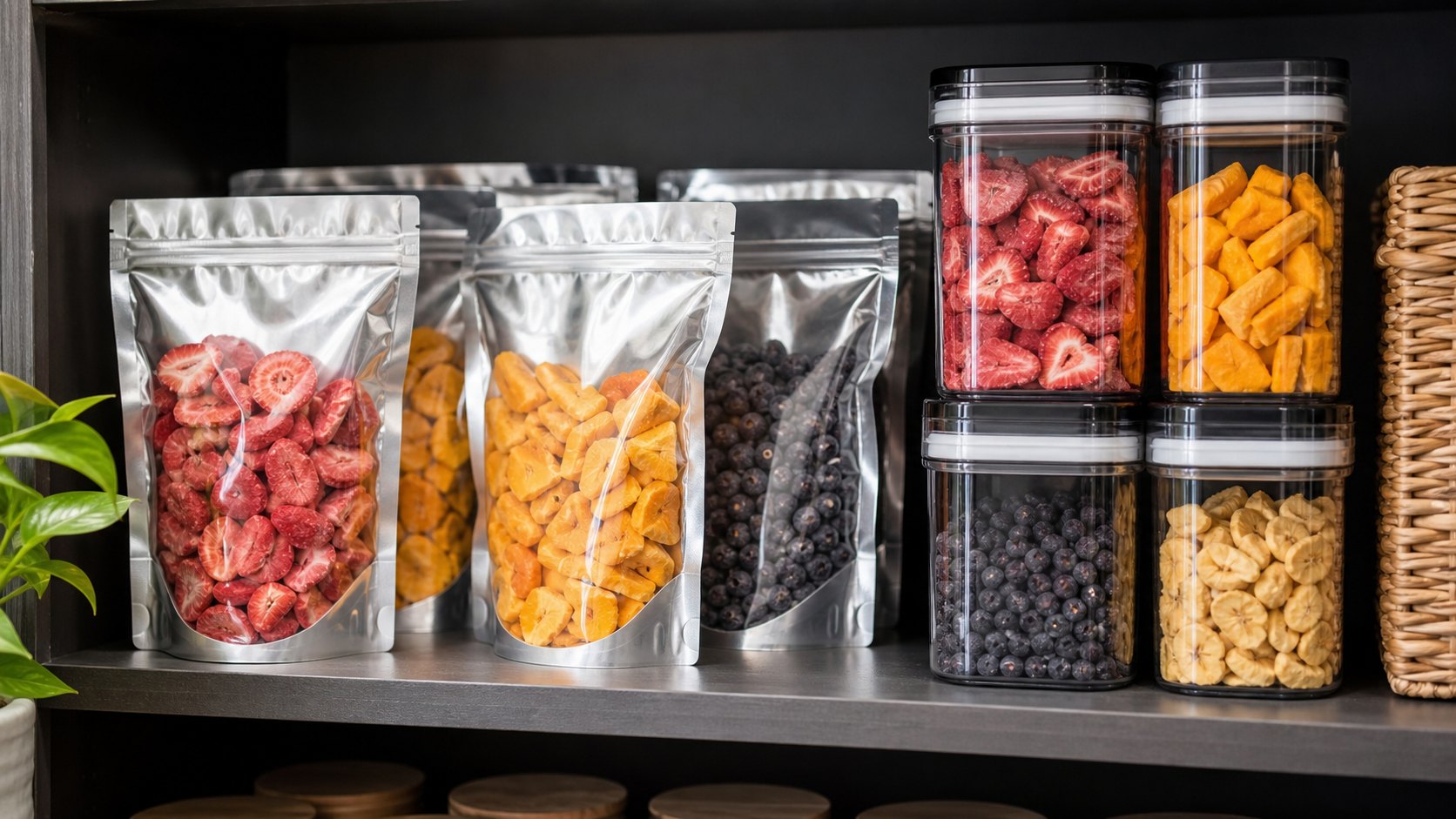
Fruit that absorbs moisture goes leathery instead of crisp, and light and warmth fade its color and flavor, so opaque Mylar beats clear jars for long storage. Iowa State Extension notes that Mylar bags with a clear side are not airtight for long-term storage, and USU Extension recommends thick Mylar (5 to 7 mil) without windows, paired with oxygen absorbers, for the best long-term protection.
Good fruit candidates include strawberries, banana, and mango. If you want to turn fruit into a product line, see our freeze-dried fruit service.
How long freeze-dried pet treats last
Pet treats are where "it depends" matters most. Lean, well-trimmed meat stores very differently from fatty meat, and raw treats need more care than cooked ones.
- Fat content. Lean cuts and trimmed organ meats keep better. Fatty pieces are the first to smell stale or rancid, the same fat problem USU Extension describes for people food.
- Raw versus cooked. Freeze drying does not cook meat or kill bacteria. Virginia Cooperative Extension notes that raw pet diets can be freeze-dried, and that pathogens such as Salmonella have been found in raw pet food ingredients, which can make people in the household sick if they handle the food or the bowls (Virginia Cooperative Extension, FST-433).
- Handling. The same publication says to wash your hands for at least 20 seconds with soap and water before and after handling pet food and treats, and to clean and disinfect surfaces and bowls that touch raw pet food.
- Storage. Virginia Cooperative Extension recommends keeping pet treats in their original container (so you have the lot number in case of a recall) and storing dry pet food somewhere cool, below 80°F, and dry, with a tight-fitting lid.
Ask your veterinarian which treats suit your pet. See also our guide to freeze-dried pet treats and raw pet food and our food notes on dog food, liver, and chicken.
After you open the bag
Every opening lets in humid air and fresh oxygen, so this is when most treats start to change.
- Reseal right away. UArizona Extension says that if you use only part of a container, you should reseal it or vacuum seal it immediately.
- Replace the oxygen absorber. Iowa State Extension advises replacing the absorber before resealing an opened container. Once an absorber is exposed to air it starts working, and it is spent when it turns hard.
- Use a jar for treats you will finish soon. UArizona Extension says airtight resealable jars or containers are fine if you plan to eat the food within a month, and no oxygen absorber is needed for that short-term storage. It also warns that humid weather will make unsealed freeze-dried food spoil faster.
- Portion before you store. Packing treats in small bags means you open less at a time, so the rest stays sealed.
- Keep a food-grade desiccant handy. UMN Extension says a food-grade moisture absorber (desiccant) and an oxygen absorber can be added to packaging to help minimize food safety risks.
Holiday gift bags and party trays
Freeze-dried treats are light, colorful, and need no refrigeration, which makes them good gifts. To keep them crunchy until they are opened:
- Pack them as close to the gift date as you can, and seal each bag right away.
- Choose opaque, moisture-barrier bags with a good seal over thin cellophane or clear favor bags, which let air and moisture through.
- Label each bag with the contents and the date packed. UMN Extension recommends labeling freeze-dried foods with the food, whether it is raw or cooked, and the date prepared. For candy, keep the original ingredient list so allergens are clear.
- Keep pet treats in separate, clearly labeled bags.
- On a party table, put out small portions and keep the rest sealed. An open bowl in a humid room starts losing its crunch quickly.
For more on bags, seals, and absorbers, see our guide to packaging freeze-dried products for retail and our packaging service.
How to tell if a freeze-dried treat has gone bad
Lost crunch is a quality problem; signs of spoilage mean the treat goes in the trash. LSU AgCenter lists the signs to look for: discoloration, mold, unusual odors, changes in texture, and an off taste (LSU AgCenter).
- Soft, chewy, or sticky means moisture got in. If you dried it yourself, LSU AgCenter says food that sat in a warm or humid room for more than 24 hours before packaging may need a short drying cycle again. A bag that has been open and soft for a while is better replaced.
- A rancid, stale, or "off" smell, especially in fatty treats or meat treats, means the fat has broken down. Throw it out.
- Any visible mold means throw it out.
- Dark spots inside a piece can mean it was never fully dry. UMN Extension suggests cutting a piece in half to check for dark spots in the middle.
When in doubt, throw it out, especially meat and pet treats.
Storing treats in a humid climate like Panama
Humidity is the main reason freeze-dried treats fail early in the tropics. Pack treats straight after drying, keep sealed bags in a cool, dark cupboard, and reseal opened bags immediately. For more, see our guides to storing freeze-dried food and humidity and freeze-dried storage in Panama. For general shelf-life guidance on all freeze-dried foods, not only treats, see how long freeze-dried food lasts.
How we can help in Panama
We freeze dry candy and sweets, fruit, and pet-food products in Coronado for households and small businesses, and we package finished batches in moisture-barrier bags. Every project is reviewed before we accept it. Raw meat, very high-fat or very high-sugar products, commercially manufactured products, and products intended for resale go through additional review under our food acceptance policy.
For holiday treats, send us a quote request with what you have in mind, roughly how much, your intended use (personal, gifts, or resale), and your packaging preference. If you are not sure how a treat will turn out, start with a test batch. For pet treats, see our freeze-dried pet food service, and for branded treats to sell, our private-label freeze drying. You can also reach us in Panama at +507 6356-7777 or in Canada and the U.S. at +1 778-846-3791.
Frequently asked questions
How long do freeze-dried treats last?
Sealed in moisture-proof packaging with an oxygen absorber and stored cool, dark, and dry, most freeze-dried treats stay safe for years, but texture and flavor fade sooner. UMN Extension says commercially prepared freeze-dried foods can last up to 25 years, while USU Extension does not recommend eating home freeze-dried products more than 5 to 10 years after processing. Once opened, treats lose their crunch much faster.
How long does freeze-dried candy last after opening?
It depends on humidity and how well you reseal it. Reseal the bag right away, replacing the oxygen absorber, or move the candy to an airtight jar. University of Arizona Extension says airtight jars are fine for food you will eat within a month. In a humid room, an open bowl of freeze-dried candy can go soft quickly.
How long do freeze-dried pet treats last?
Lean, well-dried, well-sealed treats last longest; fatty treats go rancid sooner. Keep them in their original bag or a clean container with a tight lid, somewhere cool and dry, and wash your hands for at least 20 seconds before and after handling them, as Virginia Cooperative Extension recommends. Ask your veterinarian which treats suit your pet.
Do freeze-dried treats go bad?
Yes. They can lose their crunch, go stale or rancid, or spoil if moisture gets in. LSU AgCenter lists discoloration, mold, unusual odors, changes in texture, and an off taste as signs of spoilage. Throw out any treat with mold or a rancid smell.
Can freeze-dried treats with chocolate or peanut butter be stored long term?
Not well. Freeze drying removes water, not fat, and high-fat foods are more likely to go rancid in storage. University of Arizona Extension advises against freeze-drying chocolate, peanut butter, butter, honey, and syrup as the sole ingredient. Treats that contain them are best eaten sooner.
Can WeFreezeDryIt make freeze-dried treats in Panama?
Yes. We freeze dry candy, fruit, and pet-food products in Coronado, and each project is reviewed first. Send what you have in mind, the quantity, your intended use, and your packaging preference through our quote form. Raw meat, high-fat or high-sugar products, and treats for resale go through additional review.
Sources
- University of Minnesota Extension, Preserving food at home: Freeze-drying, Amy Johnston.
- University of Minnesota Extension, Rules for freeze-dried cottage foods (January 15, 2026), Autumn Stoll.
- Utah State University Extension, Can I Freeze-Dry That? A Practical Guide to Safe and Effective Freeze-Drying (January 23, 2026), Victoria Carlile, Morgan Wayment, and Jose Brandao.
- University of Arizona Cooperative Extension, Freeze Drying 101: Preparing and Storing Your Freeze Dried Products for Best Use (AZ2097b) (2025), Amy Robertson, Margine Bawden, and Cindy Pearson.
- Iowa State University Extension and Outreach, AnswerLine, Preserving by Home Freeze Drying (June 13, 2023).
- LSU AgCenter, Freeze-Drying at Home, FAQ Fact Sheet.
- University of Maine Cooperative Extension, Tips for Freeze Drying at Home (April 25, 2024), Kate McCarty.
- Virginia Cooperative Extension, A Consumer's Guide: Ensuring the Safety of Pet Food (FST-433), Claire M. Murphy, Olivia N. Schertz, and Laura K. Strawn.
Shelf life varies by food, recipe, fat and sugar content, how completely the food was dried, packaging, and storage conditions. Figures here are general educational guidance from the cited sources, not guaranteed results for every treat. This article is for education, not formal food-safety, veterinary, or regulatory advice.
Freeze-drying results vary by food, formulation, preparation, processing conditions, packaging and storage. Figures shown on this website are general educational estimates and should not be interpreted as guaranteed laboratory results for every product. Food safety & our process
Ready to Freeze Dry?
Whether you want to preserve food for yourself or develop a product for your business, WeFreezeDryIt can help.
Get a Free Quote