What Is Freeze-Dried Candy, and Which Candies Actually Work?
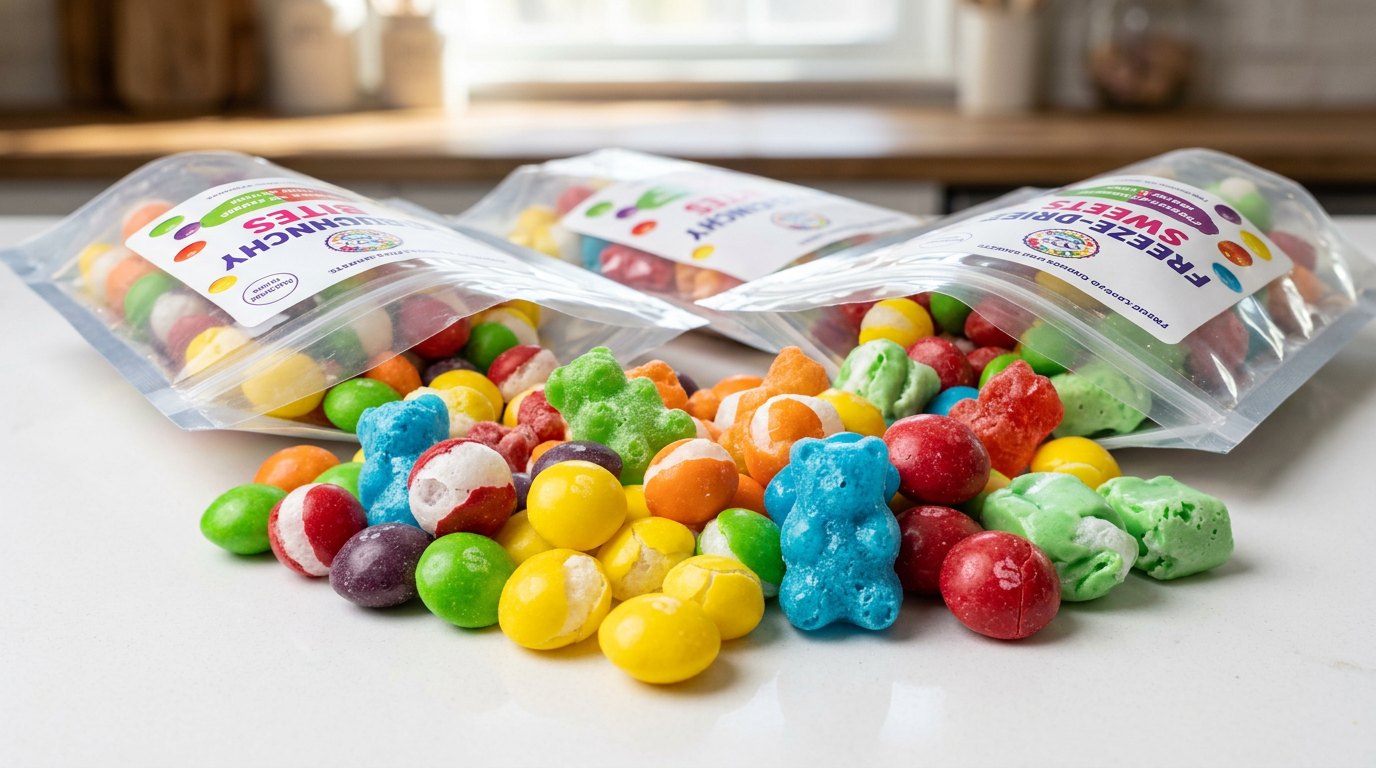
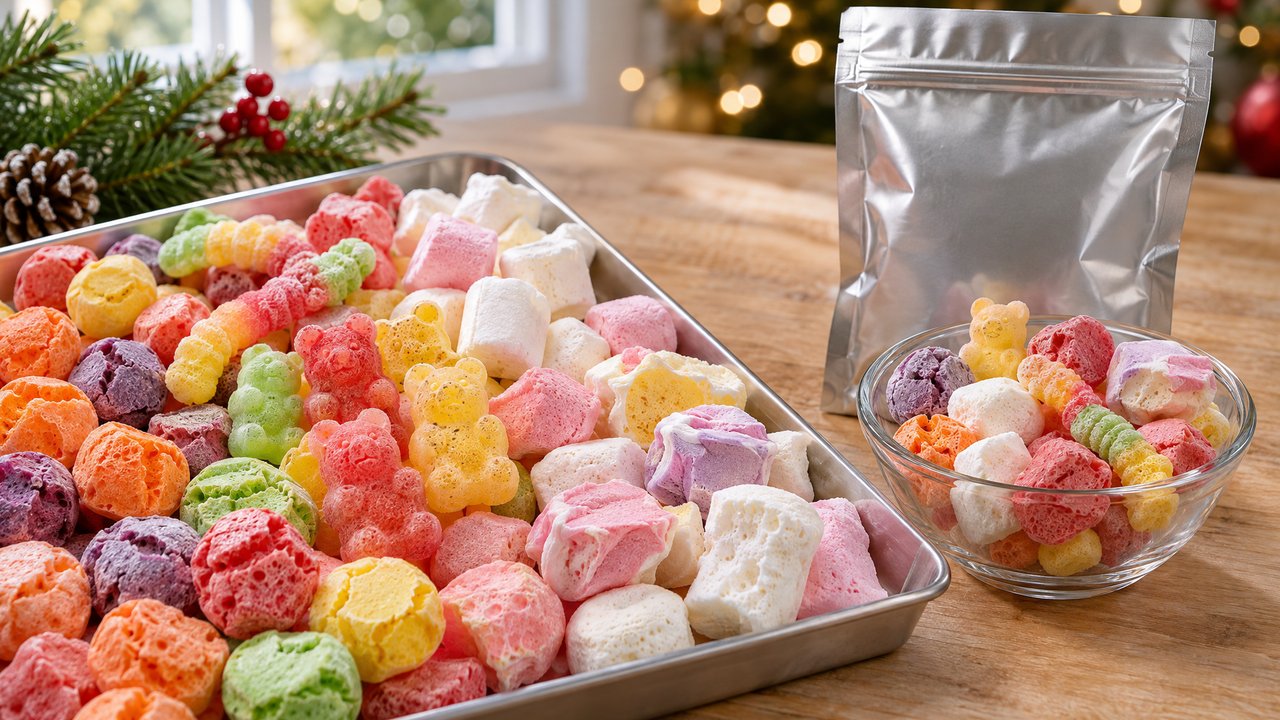
Freeze-dried candy is regular candy run through a freeze dryer’s vacuum cycle until it puffs up and turns light and crunchy. Chewy, low-fat candies like Skittles-style chews, gummies, taffy, and marshmallows work best; chocolate and plain caramel usually do not.
Chewy, sugar-based candies with little or no fat, such as Skittles-style chews, gummy candy, taffy, and marshmallows, usually work best. Chocolate, plain caramel, and other fat-heavy sweets usually do not, because freeze drying removes water, not fat. University of Maine Cooperative Extension tested this in a home unit: "The Skittles puffed up and became crunchy, while the gummy bears bubbled and inflated into airy puffs" (UMaine Extension).
The holidays are when we hear the most candy questions: party trays, stocking stuffers, gift bags, and "can you do this one?" photos of a favorite sweet. This guide explains what is actually happening inside the machine, which candies are good bets, which usually disappoint, and how to keep freeze-dried candy crunchy in a humid place like Panama.
Quick answer: which candies work and which do not
Usually good candidates (sugary, chewy or soft, little or no fat):
- Fruit chews with a candy shell, such as Skittles-style candies
- Gummy bears, gummy worms, and other gummy candy
- Saltwater taffy and similar chewy candies, cut into smaller pieces
- Marshmallows
- Many sour or fruit-flavored chewy candies (results vary by brand; some sour gummies barely change)
Possible, with testing (results depend heavily on the recipe):
- Caramel-style chews and toffee-like candies that contain butter or milk
- Candies with a thin coating or filling
- Ice cream and other dairy-based sweets (a dairy product, so it needs extra review)
Usually poor candidates:
- Solid chocolate and chocolate-coated candies
- Plain caramel and fudge
- Hard, already-dry candies with little air inside, such as pressed mints or rock candy
- Licorice, which often does not react much
- Honey, syrups, and jam on their own
The sections below explain why.
What actually happens to candy in a freeze dryer
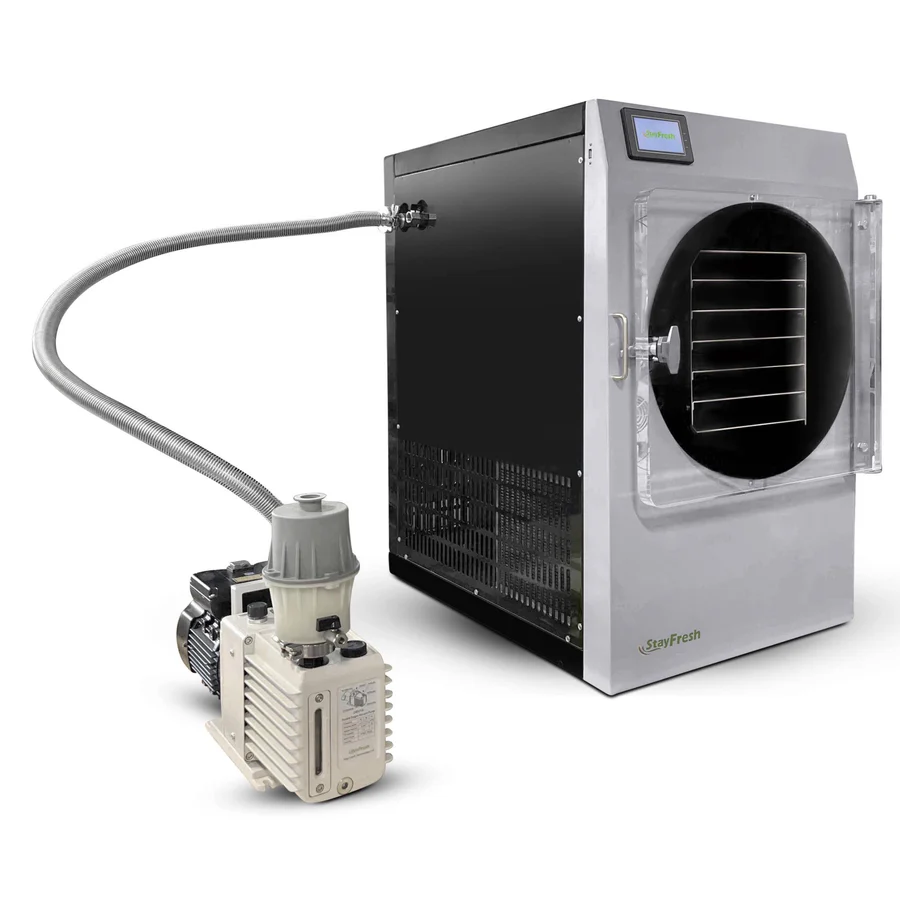
Normal freeze drying works in three steps. The food is frozen solid, a vacuum is pulled, and gentle heat turns the ice directly into vapor (sublimation). A final drying step removes the last bound moisture. Utah State University Extension describes this as freezing, primary drying, and secondary drying (USU Extension, January 23, 2026). University of Minnesota Extension notes that freeze-dried foods usually reach a water activity of about 0.08 to 0.33, which is why they are so crisp and shelf-stable (UMN Extension).
Candy is different, because most candy starts out with very little water. Richard Hartel, a professor of food engineering at the University of Wisconsin–Madison, told the BBC that the amount of freezable water in most candies is close to zero, and that "vacuum-puffing" would be a more accurate name. The candy expands, then dries, and then hardens when it comes out of the vacuum (BBC News, December 9, 2025).
In plain terms:
- When the chamber pressure drops, air and moisture trapped inside a soft candy expand.
- If the candy is soft and stretchy enough, it inflates like a balloon instead of staying the same shape.
- Gentle heat drives off the remaining moisture, and the stretched sugar sets into a brittle, airy structure.
That is why the texture changes so dramatically: a chewy candy becomes a crisp shell full of tiny air pockets, and the flavor seems stronger because there is less water in each bite.
Because candy holds so little water, many home freeze dryers have a separate candy setting. UMaine Extension notes that the candy setting "dries at a higher temperature, which is different from fruits and vegetables that have higher moisture content." Harvest Right's owner's manual for its HRC100 unit says candy can expand to as much as 4 times its size, recommends leaving extra space on the trays, and suggests cutting candies like saltwater taffy into halves or quarters so they do not overflow the tray (Harvest Right HRC100 owner's manual). Those are manufacturer instructions for that machine, not universal settings, but they explain why candy is run differently from fruit or meals.
Which candies actually work, and why
Chewy fruit candies with a shell
Skittles are the candy most people picture, and for good reason. They are mostly sugar with almost no fat, and their chewy center can stretch under vacuum. The thin shell cracks as the center puffs, so you get a crunchy, crackled piece with an intense fruit flavor. See our food note on Skittles.
Gummy candy
Gummy bears, gummy worms, peach rings, and similar candies are some of the most dramatic. They are sugar and gelatin (or a plant-based gelling agent) with little or no fat, so they can expand a lot and turn into airy, crunchy puffs. Leave plenty of space between pieces. See gummy candy.
Not every gummy behaves the same way. Harvest Right's manual specifically lists licorice and sour gummies among the candies that "do not react much at all." Sugar-coated sour gummies can still be worth a test, but they are less predictable than plain gummies.
Taffy and other soft chews
Saltwater taffy and similar chews often puff into light, crunchy pieces, but they can expand so much that they stick together or run into each other. Cutting them into smaller pieces and spacing them out helps.
Marshmallows
Marshmallows are already mostly sugar and air, so they puff and set into a crunchy, melt-in-your-mouth treat. They are also a favorite for hot chocolate and dessert toppings. See marshmallows.
Hard candy
Hard candies are a mixed bag. Some hard candies soften enough in the candy cycle to puff dramatically. Others, especially pressed mints and very crystalline candies, barely change. In the BBC report, Sow Good's CEO gave Tic Tacs as an example of a candy that does not have enough moisture and is mainly made of crystals that do not respond to the vacuum. If a candy has no air and nothing soft inside, there is little for the vacuum to work on.
Which candies usually fail, and why
Chocolate
Chocolate is mostly cocoa butter and sugar, with very little water. Freeze drying removes water, not fat, so chocolate mostly stays chocolate and can soften in the warm candy cycle. University of Arizona Cooperative Extension lists chocolate, along with peanut butter, jam and jelly, butter, honey, syrup, and oils, as foods that should not be freeze-dried as the sole ingredient because of their high sugar and/or fat content (AZ2097b, 2025). Chocolate-coated candies run into the same problem. See chocolate.
Caramel and fudge
Plain caramel and fudge are concentrated sugar with butter or cream and very little free water, so they often stay sticky and chewy instead of drying crisp. See caramel. Some commercial caramel-style chews are formulated differently and do puff, which is why the honest answer for that category is "test it first."
Honey, syrups, and very sugary sauces
High-sugar foods hold onto water and resist drying. USU Extension notes that high-sugar foods "hold onto water and resist moisture loss, prolonging drying and requiring more energy," and UMN Extension says home freeze-drying equipment does not work well for foods that are high in fat or high in sugar. A spoonful of honey tends to stay sticky instead of turning crisp. See honey.
Ice cream and dairy sweets
Ice cream can be freeze-dried, but it is a dairy product, and its fat content affects texture and storage. USU Extension's table says pasteurized dairy can be freeze-dried, while unpasteurized dairy is high-risk. We treat dairy as an additional-review item. See ice cream.
Is freeze-dried candy safe?
Candy is one of the lowest-risk things to freeze dry, because it is already a shelf-stable, low-moisture food that people eat as-is. Even so, the basic freeze-drying rules apply.
- Freeze drying does not make food safer. USU Extension says freeze drying "does not kill bacteria and/or other microbes. It preserves them." UMN Extension adds that there is no heat-treatment step in the process. Start with clean, unopened, in-date candy.
- Sanitation matters. UMN Extension's guidance for freeze-dried cottage foods calls for cleaning and sanitizing trays and tools before and after each use, washing hands, and using gloves or sanitized utensils rather than bare hands (UMN Extension, January 15, 2026).
- Watch for allergens. Many candies contain gelatin, dairy, nuts, soy, wheat, or artificial colors. Freeze drying does not remove allergens, so keep the original ingredient list with the finished bag.
- Expect a much more intense, very dry snack. UMaine Extension points out that freeze-dried foods absorb water from your body as you eat them, so drink water if you are snacking on them.
How to store freeze-dried candy so it stays crunchy
Freeze-dried candy does not usually fail because it becomes unsafe. It fails because it pulls moisture from the air and goes soft, sticky, or chewy again. UMN Extension says freeze-dried foods absorb moisture easily, and "even the humidity in the home or kitchen can impact the freeze-dried food."
For best results:
- Package candy as soon as it comes out of the dryer, before it can pick up humidity.
- Use moisture-barrier packaging. For long-term storage, UArizona Extension recommends Mylar bags with an oxygen absorber, heat-sealed. For candy you will eat within a month, an airtight jar or resealable container is fine.
- Add a food-grade moisture absorber (desiccant) for extra protection, as UMN Extension suggests for freeze-dried foods.
- Keep bags cool, dark, and dry, and away from heat sources such as stoves.
- Reseal opened bags right away. In Panama's humidity, an open bag can lose its crunch quickly.
Freeze-dried candy is also fragile. Fill bags gently and avoid packing heavy items on top. For more detail, see our guides to storing freeze-dried food and humidity and freeze-dried storage in Panama.
How long does it last? That depends on the candy, how dry it is, and how it is packaged and stored. Low-fat candy stored in sealed, moisture-proof packaging keeps its texture much longer than candy kept in an open bowl. For general shelf-life guidance on freeze-dried foods, see how long freeze-dried food lasts.
Holiday ideas for freeze-dried candy
Freeze-dried candy is popular as a novelty treat, which makes it a natural fit for the holidays:
- Stocking stuffers and small gift bags
- Dessert-table bowls for Christmas and New Year's parties
- Toppings for hot chocolate, ice cream, cakes, and cupcakes (marshmallows and crushed gummies work well)
- Party favors for birthdays and school events
- Corporate or client gifts in branded packaging
If you want candy ready for a specific party date, plan ahead. Each project is reviewed first, and some candies need a small test run before we can tell you how they will turn out.
Freeze-drying candy to sell
If you are thinking about selling freeze-dried candy, that is a different question with more steps: recipe testing, packaging, labeling, and the rules where you sell. Under our food acceptance policy, very high-sugar products, commercially manufactured products, and products intended for resale all go through additional review. For the business side, see how to start a freeze-dried candy business, plus our private-label freeze drying and packaging services.
Should you freeze dry candy at home or use a service?
If you already own a freeze dryer, candy is one of the easier things to experiment with. If you do not, buying a machine just for candy is a big investment. Our comparison of buying a freeze dryer vs. using a freeze-drying service walks through the trade-offs, and our cost guide explains what affects pricing.
How we can help in Panama
We freeze dry candy and sweets in Coronado for households and small businesses, along with fruit, meals, and other foods. Every project is reviewed before we accept it, so we can tell you honestly which candies are likely to puff and which are better left as they are.
To get started, send us a quote request with the candies you have in mind, roughly how much, whether it is for personal use, gifts, or resale, and the packaging you prefer. If you are not sure how a candy will turn out, start with a test batch. You can also reach us in Panama at +507 6356-7777 or in Canada and the U.S. at +1 778-846-3791. See our food safety page and FAQ for more.
Frequently asked questions
What is freeze-dried candy?
It is regular candy that has been run through a freeze dryer's vacuum cycle. As the pressure drops, air and moisture inside soft candy expand, the candy puffs up, and the remaining moisture is removed. The result is a light, crunchy, airy candy with a more intense flavor.
Why does candy puff up in a freeze dryer?
Most candy contains very little water, so the change is mostly caused by the vacuum. Trapped air and moisture expand when the pressure drops, and soft candy stretches before it dries and hardens. A University of Wisconsin–Madison food engineering professor has described the process as closer to "vacuum-puffing" than true freeze drying.
Which candies work best for freeze drying?
Chewy, sugar-based candies with little or no fat usually work best: Skittles-style fruit chews, gummy candy, saltwater taffy, and marshmallows. Some hard candies puff too. Licorice, some sour gummies, and pressed mints often change very little.
Can you freeze dry chocolate?
Not usefully. Chocolate is mostly fat and sugar with very little water, and freeze drying removes water, not fat. University of Arizona Cooperative Extension lists chocolate among foods that should not be freeze-dried as the sole ingredient. Chocolate-coated candies have the same problem.
Is freeze-dried candy safe to eat?
Candy is a low-risk, shelf-stable food, but freeze drying does not kill bacteria, so start with clean, unopened, in-date candy and use clean, sanitized trays and tools. Freeze drying does not remove allergens, so keep the original ingredient list.
How do you keep freeze-dried candy crunchy?
Package it right after drying in airtight, moisture-barrier packaging such as heat-sealed Mylar bags with an oxygen absorber, or an airtight jar for candy you will eat within a month. Store it cool, dark, and dry, and reseal opened bags quickly, especially in a humid climate like Panama.
Can WeFreezeDryIt freeze dry candy in Panama?
Yes. We freeze dry candy and sweets in Coronado, and each project is reviewed first. Send the candy names, the quantity, and whether it is for personal use, gifts, or resale through our quote form. Products for resale and commercially manufactured products go through additional review.
Sources
- University of Maine Cooperative Extension, Tips for Freeze Drying at Home (April 25, 2024), Kate McCarty.
- Utah State University Extension, Can I Freeze-Dry That? A Practical Guide to Safe and Effective Freeze-Drying (January 23, 2026), Victoria Carlile, Morgan Wayment, and Jose Brandao.
- University of Minnesota Extension, Preserving food at home: Freeze-drying, Amy Johnston.
- University of Minnesota Extension, Rules for freeze-dried cottage foods (January 15, 2026), Autumn Stoll.
- University of Arizona Cooperative Extension, Freeze Drying 101: Preparing and Storing Your Freeze Dried Products for Best Use (AZ2097b) (February 2025), Amy Robertson, Margine Bawden, and Cindy Pearson.
- BBC News, What are freeze-dried sweets and why are they popular? (December 9, 2025), David Silverberg, quoting Prof. Richard Hartel, University of Wisconsin–Madison.
- Harvest Right, HRC100 owner's manual (manufacturer instructions, candy application section).
Freeze-drying results vary by candy, recipe, brand, processing conditions, packaging, and storage. Figures here are general educational guidance from the cited sources, not guaranteed results for every candy. This article is for education, not formal food-safety or regulatory advice.
Freeze-drying results vary by food, formulation, preparation, processing conditions, packaging and storage. Figures shown on this website are general educational estimates and should not be interpreted as guaranteed laboratory results for every product. Food safety & our process
Ready to Freeze Dry?
Whether you want to preserve food for yourself or develop a product for your business, WeFreezeDryIt can help.
Get a Free Quote